
Researched 2026-08-19 · Women's rugby fit and size-set planning
How Should A Buyer Specify And Approve A Women's Match-Fit Rugby Jersey?
A women's rugby jersey brief needs its own body-measurement basis, pattern, underlayer assumptions and worn-movement approval. Relabelling a men's size chart or approving one flat sample does not establish fit for a women's squad.
Quick Answer
What Should Rugby Buyers Know?
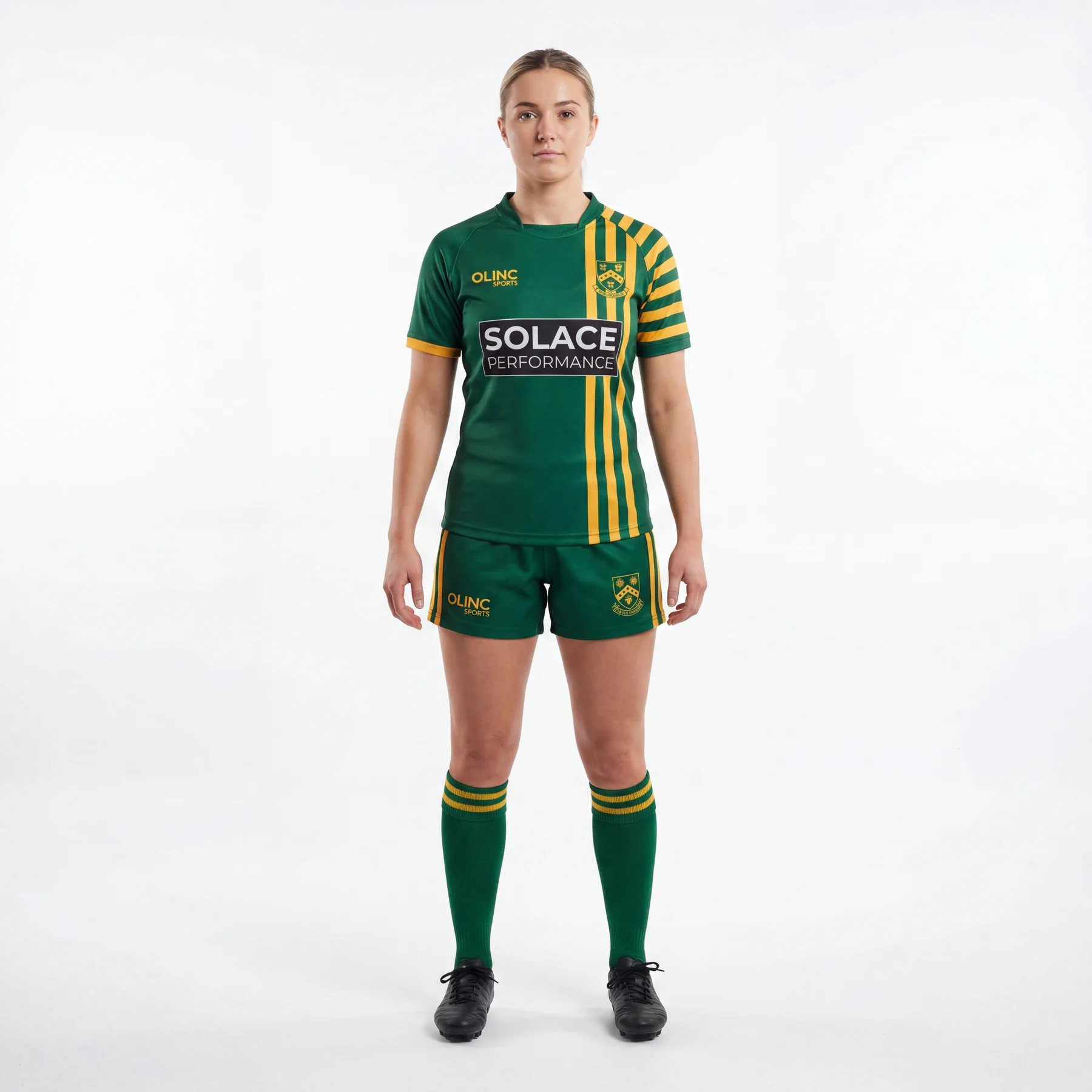
Start with the intended women's player group and one documented body-measurement method. Keep body dimensions separate from finished-jersey measurements, and identify the exact women's pattern revision rather than converting men's letter sizes. World Rugby's team-manager guidance says female cut is essential and warns that kit providers may size differently, so use test garments before locking the list. Define which normal sports underlayer and any Law 4-permitted body padding the sample must accommodate, while leaving sports-bra selection and fitting to the player and an appropriate professional. Approve a representative size set on players whose measurements sit near the middle and boundaries of each interval. Review neckline entry, bust and torso allowance, shoulder and sleeve position, hem coverage, reach, bind, scrum posture and contact with seams. Release one player-level matrix containing body measurements, jersey size, number, sample revision and approval status, then retain the pattern, finished measurements and fit notes for reorders.
Rugby research
Begin With A Women's Pattern And A Named Player Group
World Rugby's team-manager guidance states that kit cut for females is essential and also notes that one provider may size differently from another. It recommends obtaining test kit and adjusting the sizing list where appropriate. For a buyer, that creates a clear first control: the quotation must identify a women's pattern, its revision and the squad it is intended to serve. A men's pattern with renamed sizes is not evidence that the torso, waist, hip, shoulder or sleeve relationships fit the players.
Define the group without assuming every women's squad has one shape profile. State whether the range covers youth, school, university, club or senior players and whether the same pattern is expected to serve several groups. Record the measurements of the actual intended population, then identify transition and outlier cases. Do not ask the factory to infer a complete size curve from the age category, playing position or quantity total.
Request finished-jersey measurements for every proposed size, not only a generic body chart. The table should name the pattern revision, fabric reference, measurement points, garment state and tolerances. If a previous supplier's labels are being replaced, create a measured conversion exercise with test garments. Do not map Old M directly to New M because the labels look equivalent.
Evidence: World Rugby Passport
Rugby research
Keep Body Dimensions Separate From Jersey Dimensions
ISO 8559-1:2017, which ISO confirmed as current in 2026, describes anthropometric measurements used to build clothing size and shape profiles. ISO 8559-2:2025 establishes primary and secondary dimension indicators using body measurements defined in Part 1. These standards support a disciplined distinction: a player's body measurements describe the intended wearer, while a finished-jersey chart describes the product. The difference between them contains the pattern's ease, fabric behaviour and construction choices.
Write one measurement protocol for the squad. Identify the anatomical point, tape position, unit, clothing state and measurer instructions for each required body dimension. Record enough upper-body and length information to make the proposed pattern intervals meaningful, but collect only what the fit process needs. Protect player privacy by using an internal player ID in the manufacturing sheet and keeping personal or medical information outside the factory brief.
ISO 8559-3:2018 describes methods for body-measurement tables and intervals and states that garment dimensions are not included. Use that boundary when planning the size run. Count players within each proposed body interval, inspect the boundary cases and then connect each interval to one finished-jersey size. If many players sit outside the intervals or cluster at one edge, revise the size architecture instead of forcing allocations to match a predetermined order curve.
Evidence: International Organization for Standardization · International Organization for Standardization · International Organization for Standardization
Rugby research
Define The Underlayer And Padding Interface Without Guessing
World Rugby's guidance for female players recommends professional sports-bra fitting and explains that inappropriate or ill-fitting sportswear can cause discomfort. A teamwear manufacturer should not select or medically assess a player's sports bra. The sourcing decision is narrower: state the normal underlayer condition in which the match jersey will be tested, and let each player obtain appropriate fitting advice separately.
Use a plain fit code in the sample record, such as the agreed normal match underlayer plus any permitted approved body padding. Do not send bra cup data, health details or injury history to the factory. During a confidential player fitting, check whether the jersey neckline, armhole, bust allowance and internal seams work with the player's chosen match underlayer. Record the garment result and adjustment request, not unnecessary personal detail.
If players intend to wear body padding, World Rugby Regulation 12 requires compliant equipment and Law 4 permits approved chest pads. Identify the actual approved item used during the fitting and test the jersey over it. Do not claim that extra jersey thickness, compression or a tighter cut replaces approved padding or professional support. The jersey pattern must accommodate the permitted equipment without creating hard pressure points, exposed edges or restricted movement.
Evidence: World Rugby · World Rugby · World Rugby Passport
Rugby research
Translate Law 4 Into Pattern And Sample Checks
Current World Rugby Law 4 states that a player wears a jersey, shorts and underwear and that the jersey sleeve must extend at least halfway from the shoulder point to the elbow. It also lists permitted additional clothing, including washable elasticated or compressible supports and approved chest pads, and bans sharp, abrasive or dangerous items. These rules do not prescribe one women's torso shape or fit preference, but they set the clothing envelope the approved sample must respect.
Map the rule-controlled sleeve requirement on the worn sample rather than relying on a flat technical drawing. Check the shoulder point and sleeve endpoint on several sizes and in raised-arm positions. Review the neckline, hems, seam allowances, labels and decoration backs for exposed rigid or abrasive components. If a zipper, buckle, clip or other component is proposed, confirm its legality for the intended competition before sampling because Law 4 restricts such items.
Regulation 12 says its performance specifications concern manufacturers and testers and must be read with the current Law 4. Keep two approvals separate. The team or competition authority confirms that the garment and any additional equipment are permitted. The physical size-set approval confirms that the pattern, construction and chosen equipment fit the intended players. A factory sample cannot grant World Rugby approval to a separate padded device.
Evidence: World Rugby Passport · World Rugby
Rugby research
Approve A Women's Size Set In Rugby Movements
Select size-set wearers from measured evidence. Include the smallest and largest proposed sizes, a central size, each youth-to-adult or pattern-family transition, and players close to interval boundaries. If the squad includes materially different torso-length or proportion cases within one girth interval, include those risks in the fitting. A single medium sample on one player cannot approve the grade for a full women's squad.
Measure every sample flat at the named finished-garment points before wear. Then test it with the agreed match underlayer and any intended permitted padding. Review pulling over the head, neckline recovery, bust and torso allowance, shoulder seam position, sleeve opening, waist and hip interaction, hem coverage and bunching. Repeat the review during overhead reach, passing posture, binding, scrum position, acceleration stance and floor-to-standing movement.
Record specific evidence: sample size and revision, tester body-measurement code, underlayer condition, optional padding reference, actual garment measurements, photographs with consent and each alteration decision. Replace comments such as too tight with the location, movement and requested pattern change. When a pattern changes, create a new revision and recheck the affected sizes. Do not transfer approval from a different fabric or construction when stretch and recovery have materially changed.
Rugby research
Release The Roster And Preserve A Reorder Record
Build the final allocation sheet with player ID, measured body dimensions, assigned jersey size, playing number, quantity, sample revision and approval status. Keep shorts and other garments in separate size columns because one player's jersey and short sizes may differ. Mark spares, loan pieces and non-personalised training garments explicitly so they reconcile with the purchase totals.
Before release, confirm that every allocation falls inside an approved body interval or carries a documented exception. Reconcile each playing number to one size and quantity, then reconcile the totals by size against the quotation. Lock the sheet with a revision and buyer-side approver. Route any later size or number change through the existing roster change-control record rather than editing a released file without traceability.
For reorders, retain the women's pattern revision, body-to-size conversion table, finished measurements, fabric and construction reference, approved size-set evidence and player allocation. Recheck the player and underlayer condition when measurements or equipment have changed. Send Olinc the anonymised size totals, fit risks, artwork, quantities and destination with the quote request so sampling is planned around the actual squad rather than a generic women's label range.
Buyer checklist
Turn The Research Into A Quote Brief.
01
Name The Women's Pattern
Put the women's pattern revision and intended player group in the quote instead of relabelling a men's chart.
02
Test The Real Wearing Condition
Approve the jersey with the player's normal professionally fitted sports underlayer and any intended permitted padding.
03
Sample The Boundaries
Fit-test the smallest, largest, central and transition sizes, plus proportion or equipment outliers.
04
Archive The Fit Evidence
Retain body intervals, finished measurements, sample revisions, allocation and adjustment records for reorders.
Buyer FAQs
Questions To Resolve Before Production.
Can a women's rugby team use a men's jersey size chart?
Do not assume it can. Measure the intended players, identify a women's pattern and test representative sizes. If a unisex or men's-derived pattern is proposed, approve it from worn evidence rather than from renamed letter sizes.
Should a factory choose sports-bra sizes for rugby players?
No. World Rugby advises players to seek professional sports-bra fitting. The factory brief should identify the normal match underlayer condition needed for jersey testing without collecting unnecessary personal or medical information.
How many women's rugby jersey sizes should be sampled?
There is no universal count. Include the smallest, largest and central proposed sizes, every pattern-family transition and any interval with a high-risk body proportion or intended padding combination.
What movements belong in a rugby jersey fit test?
Review overhead reach, passing posture, binding, scrum position, acceleration stance and movement from the ground, alongside flat measurements and normal standing views.
What must be saved for a women's rugby jersey reorder?
Retain the pattern revision, body-to-size conversion, finished measurements, fabric reference, approved size-set evidence, player allocation and any documented fit exception.
Research record
Sources Checked On 2026-08-19.
Dates, rules, schedules and technical statements can change. Open the cited first-party source before using a time-sensitive detail for travel, competition or purchasing decisions.
- Squad Kit And Apparel — World Rugby Passport (official; accessed 2026-08-19).
- Advice For Female Rugby Players — World Rugby (official; accessed 2026-08-19).
- Law 4: Permitted Clothing — World Rugby Passport (official; accessed 2026-08-19).
- Regulation 12: Provisions Relating To Players' Dress — World Rugby (official; accessed 2026-08-19).
- ISO 8559-1:2017 Anthropometric Definitions For Body Measurement — International Organization for Standardization (official; accessed 2026-08-19).
- ISO 8559-2:2025 Primary And Secondary Dimension Indicators — International Organization for Standardization (official; accessed 2026-08-19).
- ISO 8559-3:2018 Body Measurement Tables And Intervals — International Organization for Standardization (official; accessed 2026-08-19).