
Researched 2026-09-16 · Seasonal opportunity
What Should A Wet-Weather Team Jacket Brief Specify?
Before ordering jackets for a wet-weather training block, decide what protection the buyer actually needs. A repellent surface, resistance to water penetration and moisture-vapour performance are different questions.
Quick Answer
What Should Teamwear Buyers Know?
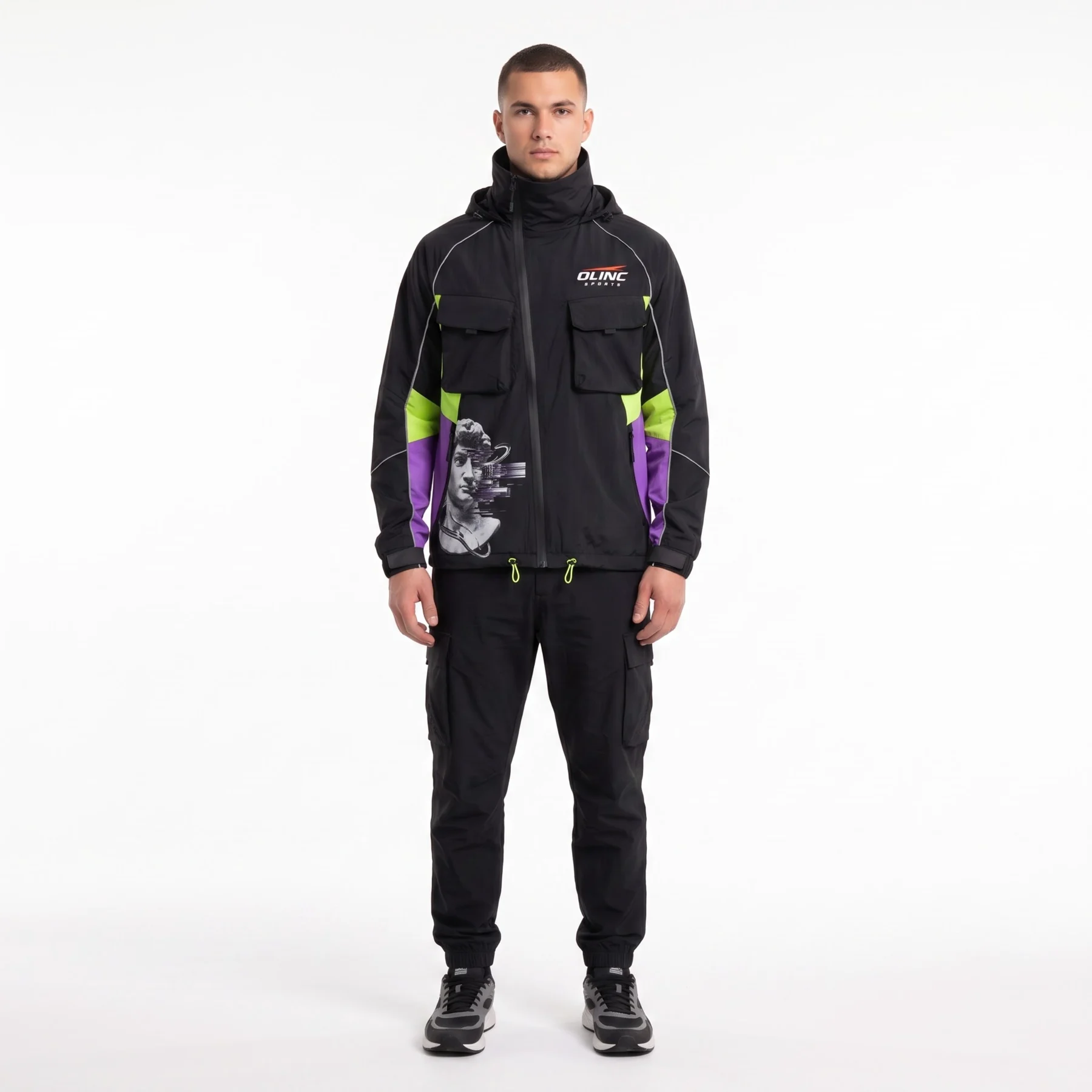
Specify the use, shell construction, relevant test methods and acceptance targets separately from jacket fit and closures. Approve a layered garment sample with the intended hood, zip, seams and decoration. Olinc Sports quotes custom outerwear from Sialkot; a fabric name or weight alone does not establish a waterproof performance level.
Teamwear research
Start With The Wearing Situation
Write the intended job before choosing a fabric: travelling to training, warming up, standing on a touchline or wearing an outer layer between sessions. A rugby coach, Gaelic club kit officer and private-label teamwear buyer may use the same catalogue reference but need different pocket access, layering room and coverage. Do not treat a seasonal order as a weather forecast or a guarantee of protection.
Record the destination, planned use period, expected layers and who will wear the jacket. Separate adult and youth requirements and identify whether the garment is for off-field use only. If players might wear it during organised activity, ask the organiser about permitted garments and details rather than assuming every hood, trim or closure is suitable.
Use these answers to set a sample brief rather than selecting the largest performance number on an unrelated report. State which decisions remain open for quotation and which are fixed. This helps a supplier propose a construction without quietly changing the buyer's intended use.
Teamwear research
Do Not Turn Surface Beading Into A Waterproof Claim
ISO 4920:2012 describes a spray method for assessing surface wetting. ISO explicitly distinguishes that result from resistance to rain passing through the fabric. The public listing remains current when checked on 16 September 2026. A photograph of droplets sitting on a shell therefore does not answer every wet-weather purchasing question.
Buyer application: give surface repellency its own line in the specification. If a supplier submits a spray-test result, record the material reference and test conditions rather than relabelling it as a whole-jacket waterproof rating. Agree whether a result is required on the original material, after a defined care treatment, or both.
Keep marketing wording pending until the evidence is matched to the approved product. A sample that looks dry after a quick demonstration is useful for discussion, but that observation should not replace the agreed laboratory assessment or become a broad promise printed on a hang tag.
Evidence: ISO
Teamwear research
Ask A Separate Question About Water Penetration
ISO 811:2018 sets out a hydrostatic pressure method for measuring fabric resistance to water penetration. It applies to relevant fabrics with or without a water-resistant finish. The official listing identifies the 2018 edition as current, with confirmation in 2025. This is a different measurement from the surface-wetting spray test.
Buyer application: agree the required result, units, method edition, material construction and conditioning with a competent laboratory or technical adviser. Do not compare two unexplained numbers that came from different methods. The method name alone is not an acceptance target, and this guide does not prescribe one universal threshold for all clubs.
For the jacket approval, make an additional checklist for seams, hood attachment, front closure and pocket openings. Ask what evidence covers those assembled details. A shell-fabric result should not silently become a claim about the complete garment. Record any construction limitation in the purchasing file before the buyer signs off.
Evidence: ISO
Teamwear research
Keep Vapour Performance Distinct From A Comfort Promise
ISO 11092:2026, published in May 2026, addresses thermal and water-vapour resistance under controlled steady-state conditions, including multilayer textile assemblies. Its public abstract says those conditions do not represent particular comfort situations and does not provide physiological-comfort performance specifications. It should not be presented as proof that every wearer will remain comfortable.
Buyer application: ask which shell, backing and lining combination a submitted result represents. A report on one component should not be assumed to describe a different assembled combination. Put the method edition beside the result so a new quotation does not hide a change of test reference.
Discuss ventilation openings and lining choices alongside the intended activity and layers. Then assess the actual sample for movement, access and practical wear. Keep wearer observations and laboratory measurements in separate fields: each can inform a decision, but neither should be renamed to make the evidence appear stronger.
Evidence: ISO
Teamwear research
Approve The Jacket Over The Intended Layers
Fit the sample over the clothing named in the brief, not just a thin shirt if the order is intended for use over a training top. Check chest ease, sleeve reach, hem coverage and whether the wearer can raise both arms without unacceptable pulling. Record the size, underlying layers and agreed garment measurements with the photographs.
Open and close the front zip and pockets while wearing the sample. Review the hood in its deployed and packed positions, the collar against the neck and cuff adjustment at the wrist. Describe specific corrections, such as extra sleeve reach or a different pocket opening position, instead of approving an imprecise instruction to make the fit better.
Mark crest and sponsor positions on the assembled garment. Ask how the proposed decoration interacts with seams, coated areas and pocket construction, and request evaluation on the intended material. Do not approve a graphic on an ordinary jersey swatch as evidence for the same graphic on the jacket shell.
Teamwear research
Release A Defined Outerwear Order
Use Olinc's technical ripstop windbreaker page as a product reference, not an automatic performance certificate. Its 190 GSM construction brief includes a packable hood, taped-seam and coated-zip routes; the page itself requires buyers to state and verify performance targets. Confirm the actual offered specification, sample route and testing responsibilities in the quotation.
Send quantity by size and colour, layering measurements, closure and hood notes, decoration files, intended claims, packing requirements and delivery destination. Include the in-hand date and ask the supplier to distinguish sample approval, production completion and freight assumptions. Do not infer an available lead time from a seasonal headline.
Before bulk release, retain the approved sample reference, test requirements, final artwork and written correction record together. Ask for disclosure before a shell, lining, finish, seam tape or zip is substituted. For a repeat order, check the same construction and care assumptions again rather than relying only on the catalogue name.
Buyer checklist
Turn The Research Into A Quote Brief.
01
Separate The Evidence
Surface wetting, penetration and vapour resistance answer different questions.
02
Sample The Complete Jacket
Review the hood, closures, seams and decoration over the intended layers.
03
Define The Quote
Supply size quantities, performance targets, sample scope and destination before approval.
Buyer FAQs
Questions To Resolve Before Production.
Does 190 GSM mean the jacket is waterproof?
No. Fabric weight is not a waterproof rating. Define the material and assembled-jacket requirements, then obtain evidence for the agreed construction.
Is a spray-test result the same as a penetration result?
No. ISO 4920 concerns surface wetting, while ISO 811 measures fabric resistance to water penetration. Keep their purposes and acceptance requirements separate.
Can a laboratory vapour result guarantee player comfort?
No. The cited ISO 11092 scope does not specify physiological comfort performance. Review the actual garment, layers and intended activity without turning the measurement into a universal comfort promise.
Research record
Sources Checked On 2026-09-16.
Dates, rules, schedules and technical statements can change. Open the cited first-party source before using a time-sensitive detail for travel, competition or purchasing decisions.
- ISO 4920:2012 — Surface wetting spray test — ISO (official; accessed 2026-09-16).
- ISO 811:2018 — Water penetration hydrostatic pressure test — ISO (official; accessed 2026-09-16).
- ISO 11092:2026 — Thermal and water-vapour resistance — ISO (official; accessed 2026-09-16).