
Researched 2026-08-17 · Sportswear decoration and sample planning
Sublimation, Embroidery Or Sewn Appliqué: Which Decoration Method Fits The Brief?
Decoration method is a product decision, not a finish selected after the jersey is designed. Fabric fibre, artwork geometry, mark rules, stretch zones, reverse-side feel, sample tests and reorder records all change when a buyer moves between sublimation, embroidery and sewn appliqué.
Quick Answer
What Should Multi-sport comparison Buyers Know?
Choose the method after fixing the garment fibre, artwork, rule-controlled mark size, wearer contact points and reorder objective. Dye sublimation is a heat-fixed route for polyester and can carry artwork across large garment areas, but the exact fabric, colour profile, panel alignment and post-heat measurements need sample approval. Embroidery uses stitches and a stabilizing system; the buyer should approve the digitized file, thread colours, backing, reverse-side finish, distortion and position on the actual garment. Sewn appliqué adds a separate cut component and edge-stitching route, so layer count, material, cut line, stitch type, placement and attachment must be controlled. Do not label one method universally best or durable. Define the intended washing and rubbing checks, test the production construction, record results against agreed acceptance criteria, and archive the method-specific files needed for reorders.
Multi-sport comparison research
Lock The Artwork Rules Before Selecting The Process
A decoration method cannot make an oversized or misplaced mark compliant. World Rugby Regulation 11 controls the permitted number, type, location and block size of marks on playing kit, and it allows unions or competition organizers to apply further restrictions. Its block-measurement instruction includes blank space inside the outline of a displayed mark. A buyer therefore needs the exact competition, garment position, maximum area and approving authority before the factory converts the crest, sponsor or manufacturer mark for production.
Start with a placement sheet that identifies each visible element: club crest, sponsor, manufacturer mark, player name, playing number and any event mark. Record its finished dimensions, position from stable seams, colour reference, minimum clear space and governing approval. Then ask which production method can reproduce that approved geometry on the chosen garment panel. The same logo may need different technical files for sublimation, embroidery and appliqué, even though the visible approved size remains the same.
Keep brand and rule approval separate from process approval. The club or competition authority decides whether the content and location are permitted. The factory sample shows whether the selected process, material and placement reproduce the authorized brief. Do not ask a decorator to infer rights to a crest, simplify a sponsor logo without approval or enlarge a mark because small details are difficult to manufacture. Route any artwork change back to the buyer-side approver.
Evidence: World Rugby
Multi-sport comparison research
Use Sublimation When The Polyester Panel And Artwork Are One Controlled System
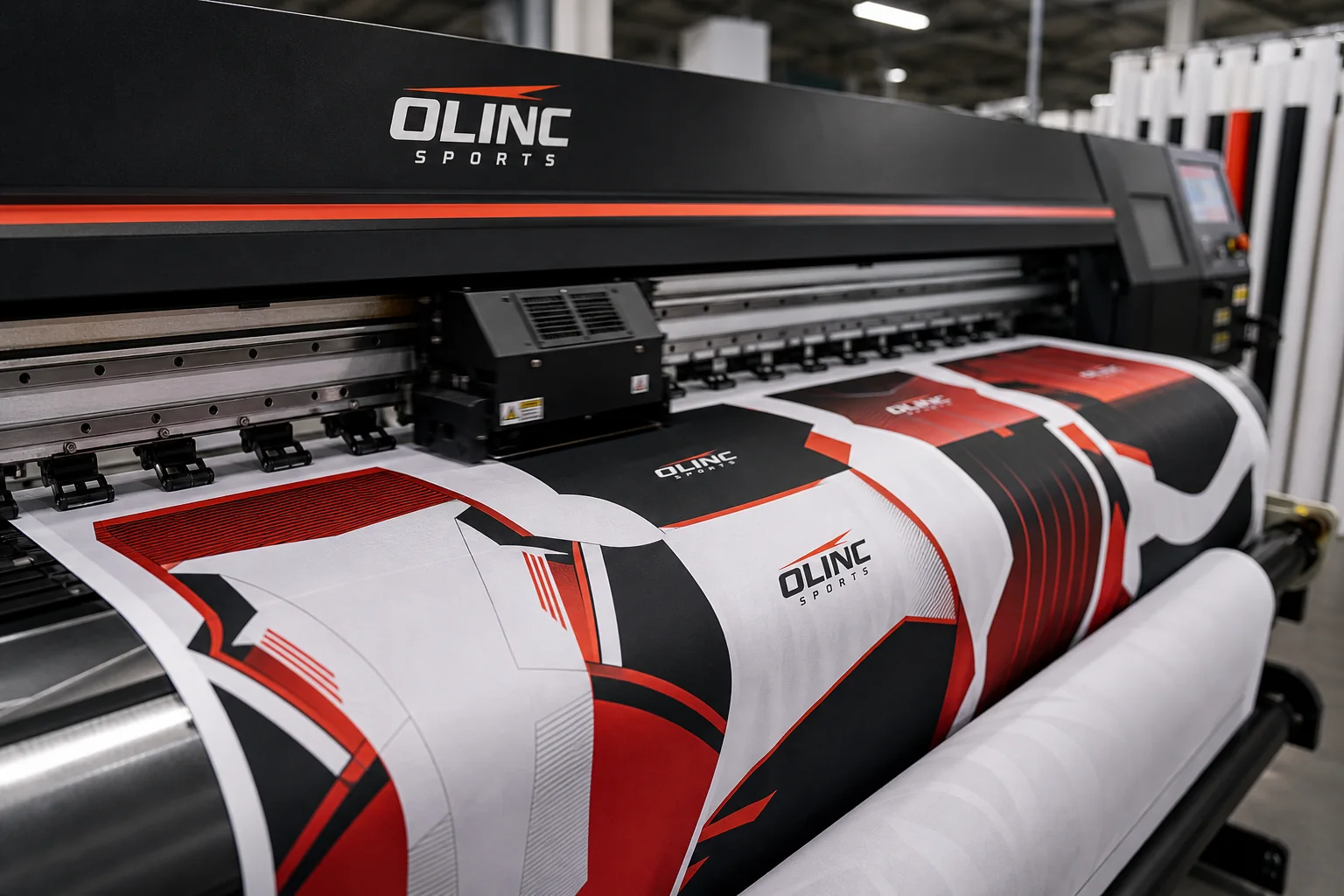
Mimaki describes sublimation ink as being fixed on polyester fabric at high temperature and distinguishes direct printing on pretreated polyester from transfer printing in which a printed image is transferred from paper to polyester. That source supports a basic boundary for the buyer: the fibre and process route must be named. A generic instruction such as 'full sublimation' does not identify the fabric reference, whether printing is direct or transfer, the heat-fixation route, colour data or the cut-panel workflow.
Sublimation can place multiple colours, gradients, numbers and sponsor artwork inside one printed panel file. The buyer still needs a panel map with bleed, seam allowance, orientation, scale and safe zones. Approve representative artwork at the actual output size, including fine sponsor text, light colours beside dark colours and two-digit player numbers. Check alignment where graphics cross side seams, shoulders, collars or plackets. A flat rendering cannot prove how cut panels meet after sewing.
Heat processing and fabric selection belong in the sample record. Identify the exact polyester construction and colourway, then compare the printed sample with the approved colour reference under an agreed viewing condition. Record finished-garment measurements after the production-representative print and sewing route instead of assuming an unprocessed blank establishes final size. For reorders, archive the output artwork, panel version, fabric reference, colour settings or approved swatch reference, size grade and roster file together.
Evidence: Mimaki Engineering Co., Ltd.
Multi-sport comparison research
Specify Embroidery As Thread, Digitizing, Backing And Garment
Embroidery is not defined by a logo image alone. Madeira's backing guidance says backing selection depends on the material and design, including fabric stability, stitch density, stitch length, design size and expected laundering. It distinguishes cut-away support for unstable fabrics such as knits from tear-away options used with more stable woven fabrics. For a teamwear buyer, that means the backing is part of the approved bill of materials, not an invisible workshop choice that can change between sample and bulk.
The approval pack should identify the digitized embroidery file revision, finished width and height, thread colour references, stitch direction where visually important, placement, backing type and colour, topping if used, and the intended reverse-side finish. Review the embroidery on the actual fabric and panel position. A dense crest placed on a lightweight stretch panel may change the local hand or create distortion; the correct decision must come from a physical sample rather than a promise that embroidery is automatically premium.
Inspect the sample laid flat and worn. Check outline registration, small lettering, gaps, puckering, panel stretch, backing show-through and the feel against the wearer. If the crest sits near a seam, zipper, collar or pad edge, measure its location from that stable construction point. When the same emblem appears on a jacket and a match jersey, treat them as separate approvals because the fabric, support and wearer contact can differ. Archive the digitized file and thread map as well as the original vector art.
Evidence: Madeira USA
Multi-sport comparison research
Control Sewn Appliqué As A Layered Component
Madeira's patch-making guide describes a patch as an embroidered design on firm backing applied to clothing or fabric. Its process identifies top fabric, backing, a cut line, optional heat seal and edge finishing. A sewn sportswear appliqué is not necessarily a detachable patch, but those component steps show why the buyer must specify more than the visible number or wordmark. The cut material, layer order, edge route and attachment all affect the finished sample.
For each appliqué element, define the visible fabric or twill, colour, thickness where relevant, number of layers, cut-file revision, edge stitch, stitch colour, overlap, placement and reverse-side treatment. State whether adhesive is only an assembly aid or part of the approved attachment route. If a name, number or crest uses several layers, provide an exploded drawing or layer table so the factory does not guess which colour sits above another. Keep the final block dimensions within the approved artwork zone.
Inspect corners, internal cut-outs, narrow strokes, layer registration, loose edges, skipped stitches and distortion around the component. Test the actual large two-digit number or longest team word rather than approving only a small crest, because the component scale and seam interaction are different. If the garment stretches over pads or across the torso, perform a worn review at the intended location. A buyer may choose appliqué for a defined visual and construction objective, but should not convert that preference into an unsupported performance claim.
Evidence: Madeira USA
Multi-sport comparison research
Give Every Method A Named Wash And Rubbing Protocol
ISO 105-C06:2010 specifies methods for determining resistance of textile colour to domestic or commercial laundering with a reference detergent. ISO's current page states that the edition was reviewed and confirmed in 2026. It also explains that a single test and a multiple test do not represent the same severity, and that the methods do not reflect every commercial washing product. A buyer should therefore name the selected method, specimen, cycles or procedure and assessment criteria rather than writing only 'wash tested.'
ISO 105-X12:2016 covers resistance of textile colour to rubbing off and staining other materials, with dry and wet rubbing options. ISO 105-X16:2016 covers small areas that cannot be isolated with the X12 apparatus. That small-area route can be relevant when a buyer wants an agreed laboratory assessment focused on a compact coloured mark. These standards define test methods; they do not set Olinc's pass grade for every order. The buyer and manufacturer must state the required rating or approved comparison before testing.
Build a method-specific sample plan. For sublimation, identify the printed areas and adjacent colours to assess. For embroidery, include thread, fabric and any visible backing interaction. For appliqué, include the component surface, edge stitching and base fabric. Photograph and measure the untested control, retain the test report or internal record, and inspect colour change, staining, puckering, distortion, delamination or loose edges as applicable. Do not claim that one successful sample proves every fabric, colour or decoration combination.
Evidence: International Organization for Standardization · International Organization for Standardization · International Organization for Standardization
Multi-sport comparison research
Choose By Buyer Objective And Preserve A Reorder Record
Use a decision table rather than a ranking. If the approved design covers large polyester panels, requires gradients or crosses several cut pieces, investigate sublimation and approve panel alignment. If the objective is a compact stitched crest, investigate embroidery and approve digitizing, support and wearer-side finish. If the buyer wants a distinct layered component for a large number or wordmark, investigate sewn appliqué and approve its cut layers and edge attachment. More than one method can appear on a range, but every combination needs its own sample and care review.
Commercial planning also matters. Ask the factory which source files, materials and machine settings must be retained for repeatability; which colours depend on stocked thread or component material; and whether a one-player reorder follows the same feasible route as the original bulk quantity. Do not promise a universal MOQ, price difference or reorder time. The confirmed quotation should state the garment, method, artwork revision, quantity, sample route, test requirement, packing and destination for the actual order.
Send the quote request with vector artwork, finished mark dimensions, garment and fabric reference, colour standards, placement measurements, size range, roster complexity, intended care route, test method and acceptance criteria. Use the Olinc Sports materials page to identify the substrate questions, the sample-pack route to define physical approval, and the quality-control page to prepare the inspection record. For private-label work, add label, hang-tag and packing instructions without allowing those files to replace the decoration specification.
Buyer checklist
Turn The Research Into A Quote Brief.
01
Approve The Mark Before The Method
Confirm content, finished dimensions, location, clear space and governing approval before converting artwork for production.
02
Sample The Actual Material Combination
Use the production fabric, panel position, thread, backing, appliqué layers or sublimation route instead of approving decoration in isolation.
03
Name The Test And Acceptance Rule
Specify the wash or rubbing method, specimen, condition and required result; 'wash tested' is not a reproducible instruction.
04
Archive Method-Specific Reorder Files
Retain output artwork, digitized embroidery files, cut layers, material references, colour records, placements, samples and roster revisions.
Buyer FAQs
Questions To Resolve Before Production.
Is sublimation always better than embroidery for a team jersey?
No. Sublimation, embroidery and sewn appliqué solve different artwork and construction problems. Select the method after confirming the fibre, mark dimensions, panel position, wearer contact, visual objective, sample tests and reorder needs.
What must a buyer approve for an embroidered crest?
Approve the digitized file revision, finished dimensions, thread colours, placement, backing or stabilizer, reverse-side finish, small lettering, outline registration and distortion on the actual garment fabric.
Can one wash test approve every decoration in a range?
No. Identify the fabric, colour and decoration combination represented by the specimen. State the method, procedure and acceptance criteria, and test additional combinations when materials or processes materially change.
What files are needed to reorder sublimated or appliqué uniforms?
For sublimation, retain output artwork, panel and size grades, fabric and colour references, approved sample and roster. For appliqué, also retain cut files, layer order, component materials, edge-stitch specification and placement.
Do sports rules normally choose the decoration method?
Rules may control permitted marks, dimensions, number, location and content, while the buyer's approved garment specification selects the production method. Check the exact governing body and competition because local restrictions can be tighter.
Research record
Sources Checked On 2026-08-17.
Dates, rules, schedules and technical statements can change. Open the cited first-party source before using a time-sensitive detail for travel, competition or purchasing decisions.
- ISO 105-C06:2010 Colour Fastness To Domestic And Commercial Laundering — International Organization for Standardization (official; accessed 2026-08-17).
- ISO 105-X12:2016 Colour Fastness To Rubbing — International Organization for Standardization (official; accessed 2026-08-17).
- ISO 105-X16:2016 Colour Fastness To Rubbing — Small Areas — International Organization for Standardization (official; accessed 2026-08-17).
- Regulation 11: Advertising Within The Playing Enclosure — World Rugby (official; accessed 2026-08-17).
- Sublimation Ink And Fixation On Polyester Fabric — Mimaki Engineering Co., Ltd. (primary; accessed 2026-08-17).
- Embroidery Backing Options Explained — Madeira USA (primary; accessed 2026-08-17).
- How To Make Patches — Madeira USA (primary; accessed 2026-08-17).