
Researched 2026-07-28 · Rules and buyer planning
Rugby Union, League And Sevens Jersey Rules: A Buyer Guide
A rugby jersey brief should name the code and competition before it names the fabric. Current union, sevens and league rules share a safety purpose, but they do not give buyers the same sleeve, number or colour instructions. This sourced comparison turns those differences into an artwork and sample checklist.
Quick Answer
What Should Rugby Buyers Know?
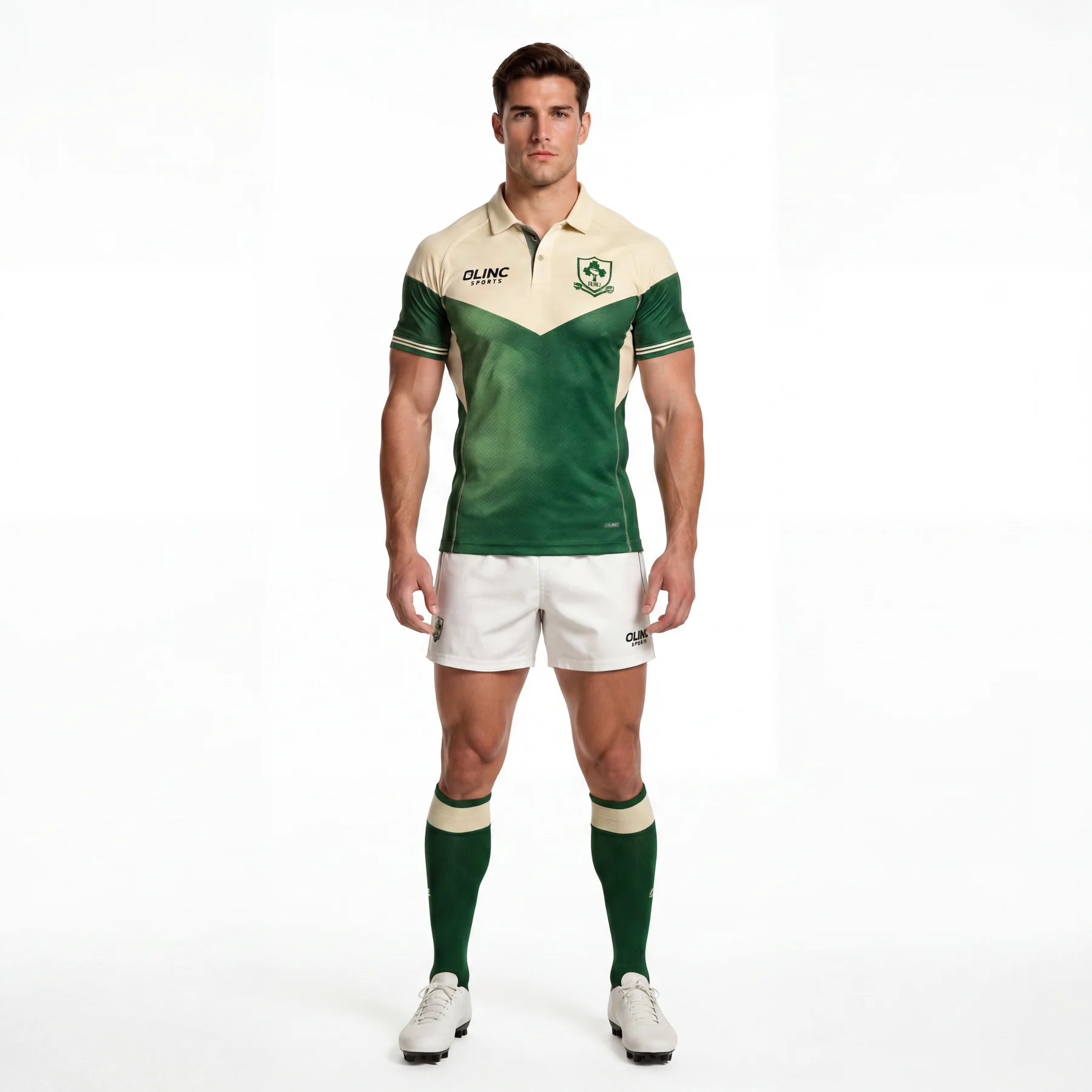
Start by identifying rugby union, rugby sevens or rugby league, then attach the current competition rules to the quote brief. Under World Rugby's 2026 Law 4, union jerseys need sleeves extending at least halfway from the shoulder point to the elbow and all clothing must comply with Regulation 12. The standard World Rugby laws also apply to sevens except where a listed variation replaces them; Law 4 is not listed among those variations. International Rugby League's 2026 laws instead emphasize numbered jerseys, distinctive colours or patterns and clear separation between opposing teams. These are compliance inputs. Fit, fabric, paneling, decoration and size runs still need separate buyer approval and physical sampling.
Rugby research
Union Buyers Need To Lock The Sleeve And Safety Brief
World Rugby's 2026 Law 4 says a player wears a jersey, shorts and underwear, socks and boots. For the jersey itself, the sleeve must extend at least halfway from the shoulder point to the elbow. That is a measurable construction constraint. A buyer should mark the shoulder point, proposed sleeve end and size-dependent measurement on the technical drawing instead of approving a fashion sleeve from a flat visual alone.
The same law sends all clothing through World Rugby Regulation 12 and bars items that are sharp, abrasive or fitted with unapproved rigid projections such as buckles, clips, rings, hinges, zippers, screws or bolts. It also gives the referee authority to decide that clothing is dangerous or illegal and to keep the player out until the problem is removed or made harmless. The purchasing implication is direct: trims, fasteners, protective components and monitoring-device arrangements belong in the sample review, not in an unrecorded production change.
Evidence: World Rugby · World Rugby Passport · World Rugby
Rugby research
Sevens Changes The Match Format, Not The Base Clothing Law
World Rugby states that its laws apply to sevens subject to the published variations. The sevens index identifies variations for team size, time, match officials, scoring, foul play, restarts, touch and lineout, scrum, penalties and in-goal. Law 4 is not listed as a sevens variation. It is therefore reasonable to apply the base World Rugby clothing requirements, including the sleeve rule, unless the relevant union, tournament or competition regulations add another instruction.
That legal position should not be confused with a claim that a sevens jersey must use a particular fabric weight, silhouette or panel map. The official sevens variations do not prescribe an Olinc product construction. A buyer may choose a slim-fit stretch concept for movement and roster preference, but should document that choice as a product specification. The approval record should separately identify what comes from the governing rules and what comes from the club's fit, climate, decoration and wear requirements.
Evidence: World Rugby Passport · World Rugby
Rugby research
League Buyers Need A Number And Colour Control Sheet
The 2026 International Rugby League lawbook uses a different identification framework. Section 4 assigns the starting players numbers 1 to 13 by position, with additional numbers for substitutes. It describes normal gear as a numbered jersey of distinctive colour or pattern, shorts, distinctive socks and studded boots or shoes. For an international-law brief, the roster-number schedule is therefore a controlled production input rather than a decorative detail added near dispatch.
The same section requires the opposing teams' jersey colours to be easily distinguishable. If the referee believes similar jerseys may affect the proper conduct of the game, either team can be ordered to change in line with the competition rules. A league buyer should approve primary and change colourways together, view both at playing distance, and check numeral contrast against every panel behind it. Registered club colours and competition instructions should be confirmed before artwork is frozen.
Evidence: International Rugby League
Rugby research
Do Not Convert Rule Differences Into Unsupported Fabric Claims
Neither lawbook turns one fibre name or garment weight into a universal performance answer. Rules identify safety, coverage and player-identification constraints; they do not prove that a heavier jersey is more durable, that mesh is always cooler, or that one stretch percentage suits every squad. Those outcomes depend on the full construction, yarn, knit, panels, seams, decoration, fit and laundering route. Buyers should request comparable samples rather than infer performance from a single specification line.
Olinc's current rugby range illustrates separate starting directions that need buyer confirmation: a polyester pique league jersey with four-way stretch, a polyester-spandex sevens concept, a women's match-fit mesh construction, and a polyester-elastane hybrid with engineered mesh and high-tensile interlock. These are quote and sample routes, not statements of approval by World Rugby or International Rugby League. The buyer remains responsible for selecting the correct competition brief and obtaining the required authority's approval.
Rugby research
Approve The Jersey In The Form It Will Be Worn
A flat artwork proof should be followed by a physical sample in the intended construction. For union and sevens, measure sleeve coverage on the worn sample from the shoulder point toward the elbow and inspect every trim or attachment for hard or projecting parts. For league, photograph the front and back at distance, verify the full roster-number file, and compare the primary jersey beside the proposed change jersey under similar lighting.
The final approval pack should name the code, competition, season and source date; identify the artwork revision; list sizes and player numbers; define crest, sponsor and label methods; and record the approved fabric and panel construction. Add photographs of the worn sample and written sign-off from the club or compliance contact. That package gives the factory one controlled instruction set and gives the buyer a repeat-order reference when sponsors, players or colourways change.
Evidence: World Rugby · International Rugby League
Buyer checklist
Turn The Research Into A Quote Brief.
01
Name The Rugby Code
Write union, sevens or league on the brief with the competition, season, governing source and approving contact. Do not ask for a generic compliant rugby jersey.
02
Map The Rule Zones
For union and sevens, measure sleeve coverage and inspect trims. For league, control the number schedule, primary colourway and change colourway.
03
Separate Rules From Product Choices
Record fabric, fit, stretch, mesh, panel and decoration decisions as approved specifications without presenting them as governing-body requirements.
04
Keep A Worn-Sample Record
Retain measurements, photographs, artwork revision, roster file and written approval so bulk production and reorders use the same accepted reference.
Buyer FAQs
Questions To Resolve Before Production.
Do rugby sevens jerseys follow a different World Rugby clothing law?
World Rugby says the base laws apply to sevens subject to the listed variations. Law 4 is not listed among the sevens variations, so the base clothing law applies unless the relevant union, tournament or competition adds another instruction. Confirm that position with the responsible competition authority before production.
What is the clearest union jersey construction rule for a buyer to measure?
World Rugby's 2026 Law 4 states that the jersey sleeve must extend at least halfway from the shoulder point to the elbow. Put the measurement points on the technical drawing and verify coverage on the worn sample across the intended size range.
What numbering information should a rugby league buyer send?
For a brief using the 2026 International Rugby League laws, supply the starting numbers 1 to 13 by position and the additional substitute numbers. Also provide player names if required by the competition, sizes, garment allocation and the approved artwork revision.
Does choosing a sevens or league product page make the jersey officially compliant?
No. A product page is a manufacturing and sampling route, not governing-body certification. The buyer should provide the current competition requirements and obtain approval from the responsible club, union, league or event authority.
Research record
Sources Checked On 2026-07-28.
Dates, rules, schedules and technical statements can change. Open the cited first-party source before using a time-sensitive detail for travel, competition or purchasing decisions.
- 2026 Laws of the Game Rugby Union — World Rugby (official; accessed 2026-07-28).
- Law 4: Permitted clothing — World Rugby Passport (official; accessed 2026-07-28).
- World Rugby Regulation 12 — World Rugby (official; accessed 2026-07-28).
- Sevens law variations — World Rugby Passport (official; accessed 2026-07-28).
- 2026 International Rugby League Laws of the Game — International Rugby League (official; accessed 2026-07-28).