Define The Line
List garments, equipment, quantity, fabric route, colors, fit, size range, and whether the range is for retail, club supply, or distributor stock.
Buyer guide
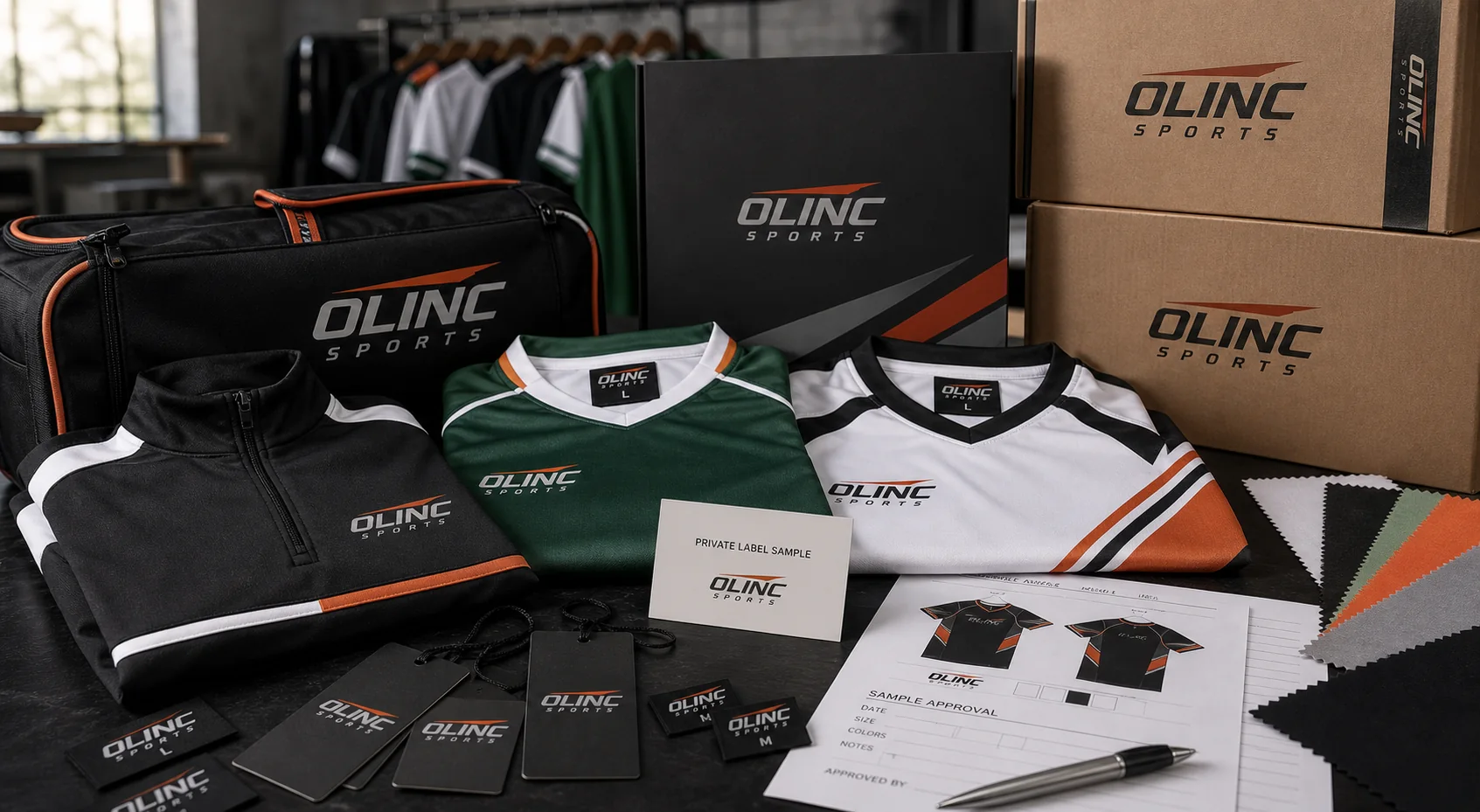
Private-label buyers need more than a logo on a garment. They need label systems, packaging, carton marks, sample approvals, material choices, and repeatable product specifications.
Buying guidance
List garments, equipment, quantity, fabric route, colors, fit, size range, and whether the range is for retail, club supply, or distributor stock.
Prepare logo files, woven label specs, hang tags, packaging, carton labels, care labels, sponsor marks, and placement rules before sampling.
Private-label buyers should document approved materials, trims, samples, packing, SKU names, carton counts, and destination requirements for repeat supply.
Start by defining the commercial range, not only the logo. Give every garment, ball, bag or accessory a SKU and record its quantity, target use, colourway, size or grade and destination market. Separate products that use different fabrics, patterns or construction. This prevents a broad brand concept from becoming an uncheckable mixed factory brief.
Create a technical approval pack for each SKU. Include material and trim references, measurements, artwork files, decoration dimensions, colour references, woven or printed labels, care wording, hang tags, barcodes, polybags and carton marks. Identify which elements are common across the range and which change by product. Do not approve only a front-view mockup when labels, back artwork and packing are part of the order.
Use sampling to resolve construction, fit, decoration and presentation. Review the physical or agreed reference against a written checklist, then send one consolidated correction round. When approved, record the sample reference and final files together. Bulk production should use that controlled set rather than newer messages that have not been incorporated into the specification.
Plan the repeat order before the first shipment. Keep approved materials, trim codes, size grading, artwork versions, pack quantities and carton instructions with the SKU. Send warehouse or importer details, destination, required date and freight discussion with the quote. Olinc Sports can then evaluate a repeatable private-label program from Sialkot instead of applying a logo to unspecified stock.
Before reordering, compare the new quantity and destination with the original record and identify every requested change. A colour, label, size grade or packaging revision should create a new controlled version. This keeps repeat supply traceable and prevents an informal message from silently changing the approved product.
Buyer Answer
Private-label sportswear production with Olinc Sports starts with a defined product line, brand files, label placement, hang tags, packaging, fabric and trim choices, size range, sample approval, MOQ discussion, packing method, and destination country. The goal is to build repeatable OEM sports products for retailers, distributors, and brands sourcing from Sialkot, not to paste a logo onto finished retail stock.