
Researched 2026-09-11 · Gaelic football size selection and bulk ordering
Gaelic Football Orders: Can One Ball Specification Cover Every Squad?
A club-wide football order should start with a squad-by-squad allocation, not a single ball size. GAA dimensions, LGFA requirements and children's modified games do not describe one interchangeable product.
Quick Answer
What Should Gaelic games Buyers Know?
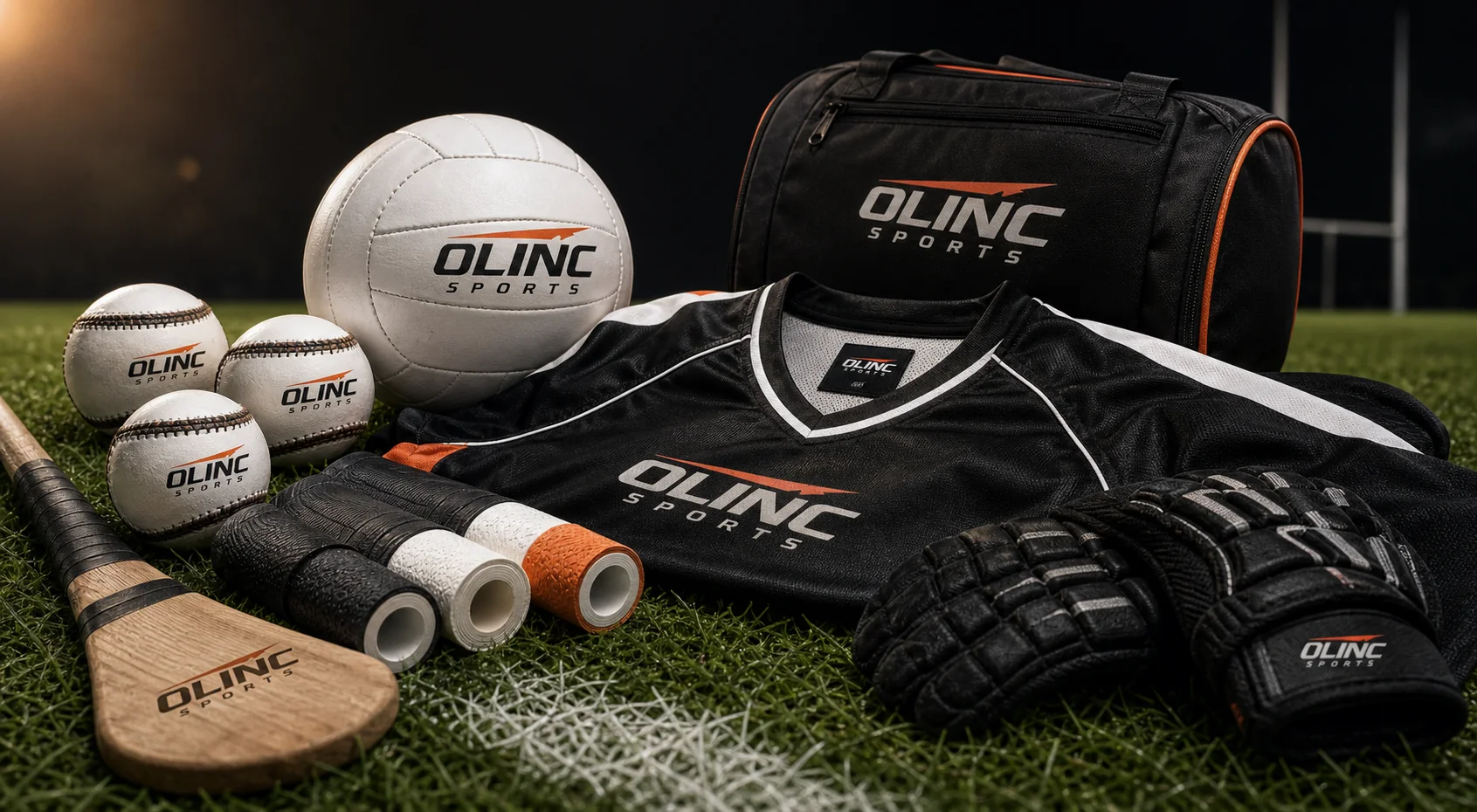
Separate each squad's football requirement before requesting bulk prices. Record the governing association, competition or programme, age grade, required ball specification, quantity and permitted branding. Confirm official-match eligibility separately from sample measurements. Olinc Sports is a quote-based Gaelic-sports manufacturer and exporter in Sialkot; its football supply page is a starting point for a specification discussion, not evidence that a particular ball is approved for every competition. Send one allocation sheet with distinct product lines, rather than a combined quantity labelled club footballs.
Gaelic games research
Start With The GAA Dimensions And Their Scope
The April 2026 GAA Official Guide Part 2 states in Rule 4.4(ii) that the football must weigh 480–500 g and have a circumference of 68–70 cm. It allows a County Committee to reduce the stated dimensions for Under 15 or younger grades within its jurisdiction. These are scoped rulebook requirements, not instructions to issue the same ball to every age group.
Buyer application: assign an association and competition to every row in the order sheet. A senior squad, younger club group and school programme can share a delivery address without sharing a ball specification. Obtain any applicable county variation before approving that group's product line. Record the source and the person who confirmed it so a new kit officer can understand why the order contains different balls.
Keep the supplier's size name alongside the actual agreed dimensions rather than using the name alone. If an invoice, sample label and specification sheet disagree, resolve that difference before adding the item to a mixed carton. Do not substitute a soccer ball specification simply because the circumference looks familiar.
Evidence: Gaelic Athletic Association
Gaelic games research
Give Ladies Football Its Own Product Line
Rule 350 in the LGFA Official Guide 2026 specifies size 4 for competition from Under 12 upwards, with a mass of 400–420 g, circumference of 62.5–64.5 cm and inflation to 6.5 psi. It directs Go Games towards a smaller size 3 or the relevant recommended Go Games football. The guide was checked on 11 September 2026; the football rule appears on printed page 59.
Buyer application: do not fill a ladies squad's allocation from the men's senior ball line merely because both orders say Gaelic football. Give the LGFA line its own size identifier and sample record. Where an underage group plays a modified programme, confirm the organiser's applicable equipment instruction before choosing the ball. An age label without the programme name is not enough to settle that decision.
Treat inflation as a recorded condition, not an estimate made by squeezing the sample. For the cited LGFA specification, include the stated pressure in the review record. For other products, obtain the relevant rule and manufacturer instructions rather than extending that pressure to every football in the shipment. If those instructions conflict, ask the supplier and competition authority to resolve the conflict before use.
Evidence: Ladies Gaelic Football Association
Gaelic games research
Plan Go Games By Programme, Not An Old Age Chart
The joint Go Games FAQ dated 8 May 2026 describes adapted games for children from U7 through U12 and explains that participating units remain bound by their association's rules. It emphasises small-sided games and participation. That context matters when a buyer is grouping equipment for a nursery, Go Games section and older competitive squads.
Buyer application: ask each programme lead for the current ball recommendation for that code, grade and event format. Do not treat an old internet chart, a supplier's touch-stage name or a colour as a complete specification. Record the agreed physical ball type with its product reference. The FAQ's programme age range is not itself a size chart and should not be presented as one.
Build the quantity from the sessions actually being equipped. List groups training at the same time, their existing usable stock, the planned allocation and the reserve quantity authorised by the club. Keep reserve quantities as a buyer decision rather than inventing a universal balls-per-child ratio. Separate nursery equipment from organised match stock so a coach does not receive the wrong product simply because the carton says youth.
Evidence: GAA / LGFA / Camogie Association
Gaelic games research
Keep Match Eligibility Separate From Factory Acceptance
The GAA guide also makes football approval dependent on Central Council standards and tests and requires compliance with its Playing Gear and Equipment provisions. Meeting the mass and circumference figures alone therefore does not establish eligibility. A factory sample and a competition approval record answer different questions.
Buyer application: request evidence for the exact proposed model and intended use before calling it an official-match ball. If that evidence is unavailable, leave the match-use claim unresolved rather than relying on words such as match quality. This article does not claim that Olinc holds a governing-body licence or that a cited product has official approval.
Give training, promotional and official-match requirements distinct descriptions where they differ, but do not assume the word training removes all applicable programme rules. Ask the buyer's competition contact about the actual use. Approval marks must not be added to custom panel artwork without the corresponding rights and authorisation.
Evidence: Gaelic Athletic Association
Gaelic games research
Approve One Identified Sample For Each Ball Line
For every proposed ball line, identify the sample, panel construction, cover material, valve, printed size designation and artwork revision. Agree how and under what conditions circumference, mass and pressure will be checked. Record the instrument used, units, sample condition and results so the buyer and supplier can discuss the same observation rather than two descriptions of how firm a ball feels.
Ask for a pressure-retention check with a stated starting pressure, elapsed time, conditions and acceptance criterion. Do not invent a leakage limit from the rulebook's dimensional range. Likewise, any grip, water-exposure or durability claim needs an agreed method and evidence appropriate to the claim. A short handling review can inform a buyer preference; it does not prove a season-long performance promise.
Use photographs to record panel alignment, print legibility, valve location and the agreed branding. Keep the approved physical sample identified until the shipment is accepted. A change of cover or bladder after approval should trigger a documented review of the affected specification, not an unnoticed substitution because the ball retains the same commercial size name.
Gaelic games research
Pack By Allocation And Make Reorders Traceable
Set the packing sequence from the club's receiving process. Give each ball line a code and each carton a contents record that states size or stage, model, quantity and intended group. If mixed cartons are necessary, show their exact contents and separate the groups inside. Do not make the person unpacking identify different sizes from panel colours alone.
Send Olinc the quantity split, sample references, permitted logos, panel colours, packing preference, destination and required arrival date. Ask the quote to distinguish sample work, bulk production and shipping assumptions. Confirm whether the balls will arrive inflated, partly inflated or deflated and what preparation the recipient must perform; do not assume a shipment condition from a catalogue photograph.
For a reorder, retain the product code and measured specification alongside the squad allocation. Recheck the applicable rules and organiser instructions before repeating last year's split. This guide addresses ball selection across programmes; it complements, rather than replaces, the separate Olinc guidance on sliotar acceptance and teamwear reorder files.
Buyer checklist
Turn The Research Into A Quote Brief.
01
Separate The Squad Lines
Use distinct product references for different association, age-grade and programme requirements.
02
Measure Under Agreed Conditions
Record mass, circumference and inflation conditions for each identified sample, with separate approval evidence.
03
Label For The Person Unpacking
Make model, size or stage, quantity and intended group readable on the carton contents record.
Buyer FAQs
Questions To Resolve Before Production.
Can a club order one football for all its teams?
Only if every intended use genuinely shares the same confirmed requirements. Do not combine different association or programme specifications merely to simplify the purchase order.
Does the printed size establish match approval?
No. A size marking identifies a product category; obtain the exact model's eligibility evidence and separately check the agreed sample specification.
Should the buyer specify one pressure for the entire order?
No. Record the applicable rule and manufacturer instructions for each ball line. Resolve any conflict before sampling or use instead of transferring one product's pressure to another.
Research record
Sources Checked On 2026-09-11.
Dates, rules, schedules and technical statements can change. Open the cited first-party source before using a time-sensitive detail for travel, competition or purchasing decisions.
- GAA Official Guide Part 2, April 2026 — Rule 4 Equipment — Gaelic Athletic Association (official; accessed 2026-09-11).
- LGFA Official Guide 2026 — Rule 350 Football — Ladies Gaelic Football Association (official; accessed 2026-09-11).
- Go Games FAQ, 8 May 2026 — GAA / LGFA / Camogie Association (official; accessed 2026-09-11).