
Researched 2026-10-31 · American football fabric and panel development
Football Jersey Stretch Panels: Approve Extension and Recovery Separately
A side panel that stretches far enough to put a jersey on is only one part of the decision. The buyer also needs to know what happens after the load is removed and whether the sewn panel still represents the intended garment shape.
Quick Answer
What Should American football Buyers Know?
For an American football jersey, identify each proposed stretch panel by material, cut direction and location. Request suitable fabric evidence for extension and residual growth, then review the sewn sample over the intended pads. Keep the technical result, seam behaviour and returned garment shape as separate approval lines. A fabric described as four-way stretch does not, by itself, define those decisions.
American football research
Map the panel before comparing its stretch
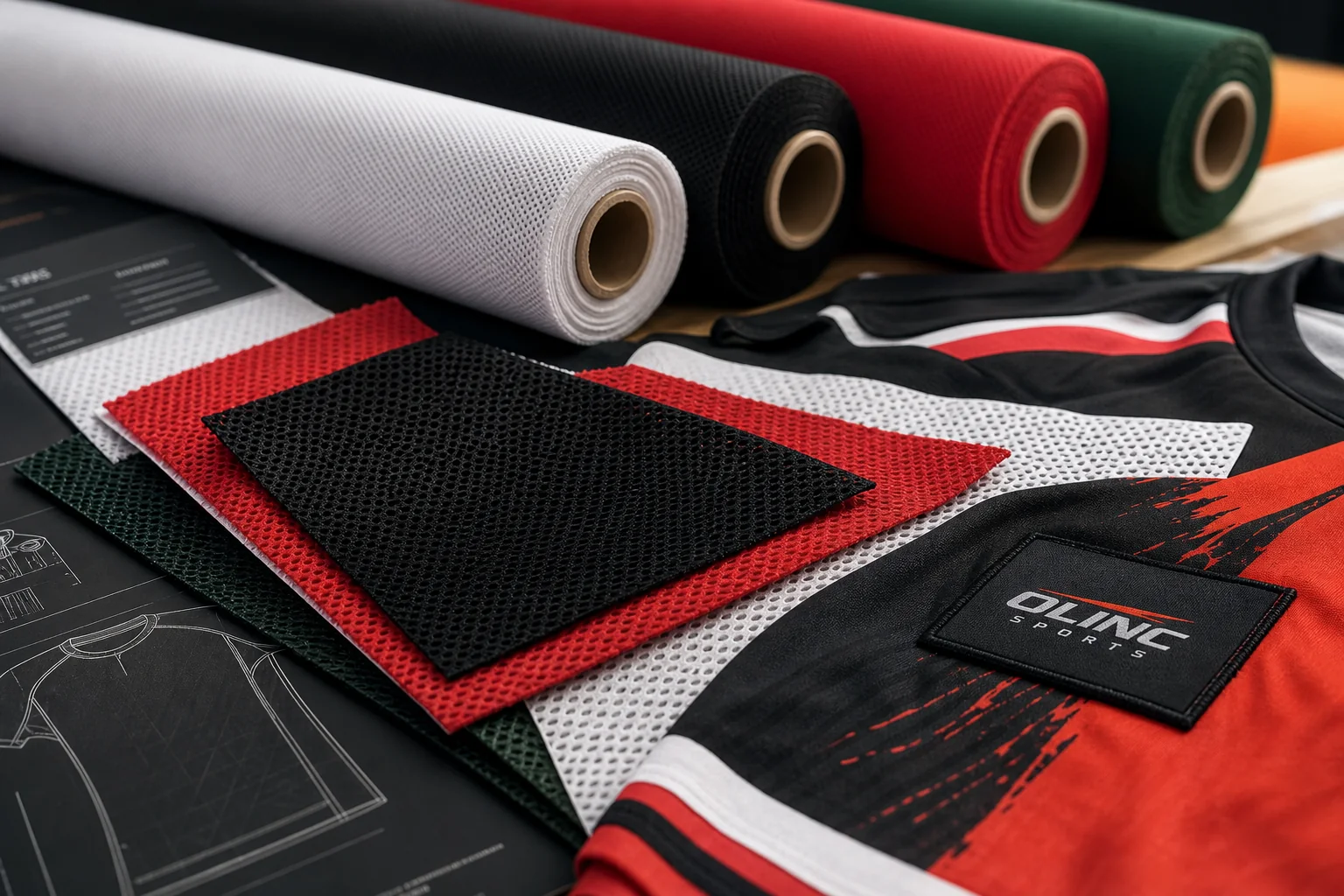
Start with the side, underarm or other stretch zone actually proposed for the jersey. Mark its boundaries on the pattern sketch and identify the adjoining body material. Record the fabric article, stated composition, finish, colour and intended cutting direction. If the factory proposes the same fabric in several locations, identify each location rather than approving an unnamed stretch insert.
Our recommendation is to attach a labelled material swatch to this panel map. State which direction will run around the body and which will run vertically. Ask the technical team to confirm the orientation used in its sample and reports. A material swatch rotated for a convenient demonstration should not silently become evidence for a differently oriented production panel.
American football research
Ask what the fabric report measured
ISO 20932-1:2018 describes strip and loop methods for measuring fabric elasticity and related properties, excluding narrow fabrics. Its listing also identifies a 2021 amendment. Ask the laboratory to confirm the applicable method and amendment, specimen direction and reported property instead of requesting a generic stretch pass.
For the buyer's comparison, keep the material reference and report identity beside the result. Ask which loading conditions, repetitions, measurement timing and specimen state apply. Let the laboratory select an appropriate procedure for the actual construction. This guide does not reproduce the paid method or set a universal extension percentage for football jerseys.
If a supplier changes the panel material or its orientation, flag the earlier evidence for review. Confirm whether the existing report represents the revised proposal. Keep a change in fabric evidence separate from a change in pattern dimensions; increasing the panel width is a different production decision from choosing a different material.
American football research
Separate extension from residual growth
ASTM D2594/D2594M-21 distinguishes fabric stretch under a known load from fabric growth assessed after an imposed extension is removed. Its scope concerns fabrics with high stretch and good recovery under low tension. The standard notes that support applications may need other methods, so its name should not be attached automatically to every tight-fitting jersey material.
ASTM also warns against using this method for commercial-shipment acceptance because its between-laboratory precision is poor. Treat that limitation seriously: ask a competent laboratory how the proposed evidence can support your development decision, and agree any acceptance route separately. Do not rank suppliers from two unexplained percentages obtained under different conditions.
In the sample file, use separate fields for the extension result and the residual-growth result, together with their applicable conditions. Our suggested decision wording is specific: the material evidence is accepted for the identified panel proposal, or a named question remains open. Avoid turning one favourable result into a promise about every garment size or the product's lifetime.
Evidence: ASTM International
American football research
Review the seam as part of the stretch zone
Coats' technical-support guidance treats fabric elongation and seam elongation as matters requiring analysis and application-specific recommendations. This supports asking the sewing team to investigate the actual fabric-and-seam combination. It does not prove that Olinc uses a particular thread, machine or external technical service.
Request an identified sewn trial using the proposed adjoining materials and seam construction. Observe what happens at the seam as the sample is handled through the agreed review: local restriction, opening stitches, broken thread or a panel that does not return to its intended shape should be recorded by location. Ask the technical team to diagnose the cause and submit a labelled revision. A buyer should not prescribe an arbitrary tension adjustment from a photograph.
Evidence: Coats
American football research
Check the sewn panel over the intended equipment
Our proposed garment review starts with the pad profile, wearer or fit model, jersey size and sample revision written down. Review the panel in the intended wearing position, then during agreed movements such as reaching and returning to rest. Photograph the same locations before movement and after returning to the review position, with consistent presentation.
Check the panel edges, underarm junction and adjoining artwork independently. Record whether the intended silhouette returns, whether the seam remains intact and whether a graphic crossing the zone requires further review. These observations are a practical sample record, not a laboratory measurement of recovery or a competition-compliance certificate.
Keep the existing general pad-fit and number-visibility guide alongside this focused panel review. The broader guide addresses equipment coverage and artwork visibility; this record asks whether the specified stretch material and its sewn junction remain acceptable. Approval of the panel does not close an unresolved number-layout or equipment-fit issue.
American football research
Release one identified panel combination
Use one approval sheet with six entries: panel location, material identity, cut direction, fabric evidence, sewn-trial observations and the final garment decision. Give each entry its own status and responsible reviewer. Keep the accepted swatch, sample revision and report references linked so an unapproved substitute cannot borrow the old approval.
For a club, school or private-label football order, send Olinc Sports the jersey sketch, proposed stretch-zone map, pad reference, size allocation and intended destination. Include any existing fabric reports with their complete conditions and identify the questions still needing technical review. Request a sampling quote for that scope and agree the relevant criteria before testing or production.
Confirm material availability, sample costs and production timing for the actual project. No fabric performance, tolerance, order minimum or lead time is promised here. When the panel material, orientation, seam or finish changes, ask which parts of the approval need repeating before the revised combination is released.
Buyer checklist
Turn The Research Into A Quote Brief.
01
Identify the Direction
Connect every result to the panel material and orientation actually proposed for the jersey.
02
Record Two Properties
Keep extension and residual growth distinct, with the method limitations and conditions visible.
03
Approve the Sewn Combination
Retain the accepted fabric reference, seam trial and padded garment revision together.
Buyer FAQs
Questions To Resolve Before Production.
Does a four-way-stretch description approve a football jersey panel?
No. Ask what the description means for the identified material and direction, request suitable evidence, and review the sewn panel in the intended garment.
Can a fabric report approve the seam joining the stretch panel?
It does not establish the behaviour of every sewn junction. Request an identified seam trial and review the finished jersey, recording any local restriction, damage or unresolved shape change.
Should the same acceptance value be copied into every size?
Do not assume that one value or one sample covers the entire size range. Agree the evidence and representative garment samples needed for the actual pattern, material combination and order.
Research record
Sources Checked On 2026-10-31.
Dates, rules, schedules and technical statements can change. Open the cited first-party source before using a time-sensitive detail for travel, competition or purchasing decisions.
- ISO 20932-1:2018 — Elasticity of fabrics: strip tests — International Organization for Standardization (official; accessed 2026-10-31).
- ASTM D2594/D2594M-21 — Stretch Properties of Knitted Fabrics Having Low Power — ASTM International (official; accessed 2026-10-31).
- Problem Solving — Garment Tech Support — Coats (primary; accessed 2026-10-31).