Researched 2026-08-25 · American football format and uniform planning
Can One Football Uniform Brief Cover Flag, 7v7 And Tackle?
No. Flag, 7v7 and tackle programs can share colours and brand assets, but they need separate garment blocks, lower-body specifications, number maps and worn-sample checks because the playing equipment and rule controls are different.
Quick Answer
What Should American football Buyers Know?
A buyer should not send one generic American football uniform tech pack for flag, 7v7 and tackle teams. USA Football's current Flag 7's Rulebook Version 2026.2 requires jerseys below the belt line to be tucked in, prohibits belt loops, pockets, snaps, clips and zippers on shorts or pants, and requires flags to contrast sharply with the lower garment and remain unobstructed. Those controls make hem length, side-panel colour and pocket construction part of the playing brief. Tackle uniforms must instead be approved over the intended protective-equipment profile and against the competition's number, colour, marking and equipment rules. NCAA provides a current football rules page and a Division I uniform diagram; the diagram says required numbers must remain clearly visible and that permitted marks may not interfere with them. NFHS separately maintains 2026 football jersey-and-pant resources for high-school programs. The buyer should therefore name the exact rules authority, age group, format and event before artwork begins. Build separate style codes for the flag top, pocketless flag short and padded tackle jersey or pant. Approve each on a representative player in playing equipment, keep one controlled number and colour map, and record which garment belongs to which roster. Shared logos are efficient; a shared unqualified construction file is not.
American football research
Name The Format And Rules Authority Before Artwork
Start the quote brief with the competition, rules authority, age division, team count and first required wear date. The word football is not enough. A school tackle team operating under NFHS rules, a college tackle program using NCAA rules and a youth flag league using USA Football 7's rules do not present the factory with the same garment or approval problem.
USA Football's current rules page separates IFAF, USA Flag 5's and USA Flag 7's resources and explains that flag removes tackling and blocking. Its 7's rulebook is identified as Version 2026.2. NCAA maintains a separate current football rules hub with an official rulebook, uniform diagram and 2026 updates. NFHS publishes its own 2026 high-school football resources, including jersey-and-pant guidance. Treat each source as a competition input, not as an interchangeable football standard.
Put the governing document and revision date in the tech pack. Ask the league or event organiser about local amendments before bulk approval, especially when a tournament supplies flag belts or jerseys. The buyer owns that competition confirmation. The factory can map the confirmed requirements into pattern, artwork and sample controls but should not guess which rulebook applies from the club name alone.
Evidence: USA Football · National Collegiate Athletic Association · National Federation of State High School Associations
American football research
Build Flag Shorts Around Belt Access And Pocket Prohibitions
The USA Flag 7's 2026.2 equipment section prohibits belt loops and pockets on shorts or pants. It also excludes snaps, clips and zippers and says a player may not tape or secure the garment to make it compliant. A retail training short with a zipped phone pocket is therefore not a safe default for this rule set, even when the fabric and team colours look suitable.
Specify a dedicated pocketless lower-body style. The tech pack should show a clean waistband, uninterrupted hip zones, drawcord treatment, side seams, gusset, inseam, finished outseam and every label position. Check whether an exposed cord end, bulky seam, heat-transfer edge or decorative tab could sit under the supplied belt or make a flag difficult to see or pull.
Approve the actual belt and flags with the garment. Record belt width, socket placement and the intended player size range. A flat short measurement does not show whether the waistband rolls, the belt migrates or a side panel sits behind the flag. Photograph front, side and back views on representative wearers before releasing the size set.
Evidence: USA Football
American football research
Keep Flag Colours And Jersey Hems Clear Of The Pull Zone
USA Football's 7's rulebook requires flags to contrast sharply with the shorts or pants. It also says flags should remain visible and free from obstruction. This turns the lower-body colour map into an equipment decision. A dark flag over a dark side panel can fail the intended contrast even when the team palette itself is correct.
Ask the event which flag colours it will issue before approving the short artwork. If the event may use more than one colour, supply the garment palette and request a written contrast decision. Avoid placing a large tonal sponsor block, gradient or camouflage effect directly under the hip flags until the organiser accepts it. Keep the approval record with the colour values, fabric swatches and belt photographs.
The same rulebook requires jerseys that hang below the belt line to be tucked in and treats deliberate flag obstruction by the jersey as flag guarding. Specify a hem and body length that can stay tucked during movement without excess fabric bunching around the belt. Test reaching, rotating, sprinting and bending with the belt fitted; do not approve only a relaxed front photograph.
Evidence: USA Football
American football research
Use A Separate Padded Block For Tackle Jerseys
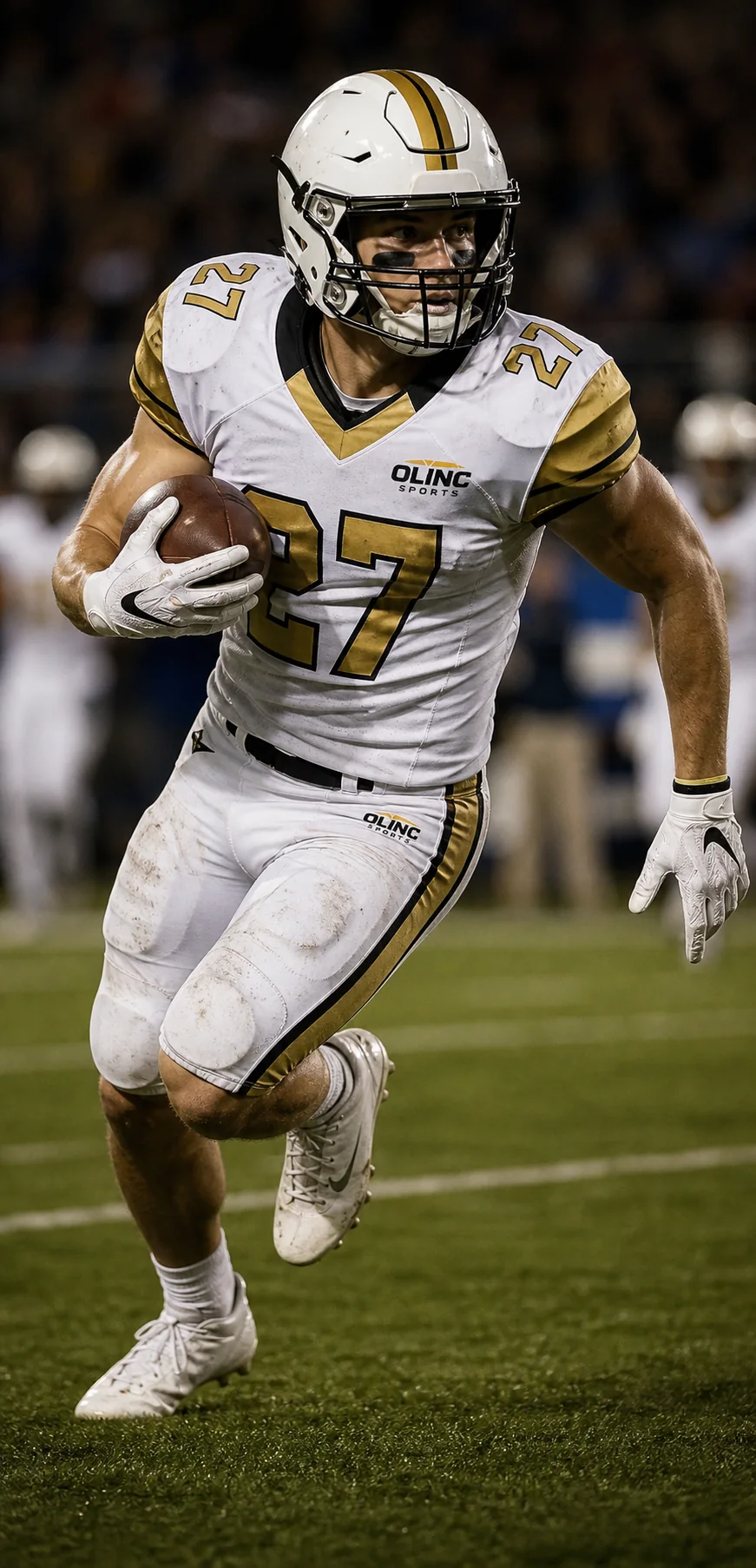
A tackle jersey must accommodate shoulder pads and remain stable over protective equipment. That changes the chest, armhole, sleeve, neck, body length and stretch assumptions. Do not enlarge the flag top by one label size and call it a tackle fit. Begin with the actual pad model or a documented pad profile for each representative sample size.
Map front, back and shoulder numbers on the worn padded sample. The current NCAA Division I uniform diagram states that numbering rules are intended to provide a clearly visible number for coaches, media and spectators in varied weather and lighting, and that permitted logos may not interfere with required markings. This means the buyer must inspect number shape, contrast, distortion and separation from sponsor, conference, manufacturer and commemorative marks after the jersey is stretched over pads.
High-school buyers should use the current NFHS 2026 jersey-and-pant resource supplied by their governing association, while college buyers should use the NCAA rules and any institutional review process. Freeze the confirmed number dimensions, stroke, border, colour and placement in a separate tackle artwork map. Keep the rule approval and sample approval together, because a visually attractive mockup is not evidence that the worn uniform is accepted.
Evidence: National Collegiate Athletic Association · National Federation of State High School Associations
American football research
Control Shared Branding Without Sharing Unqualified Patterns
A club can keep one crest master, sponsor file, type system and colour library across its formats. The production files still need separate style codes. Use clear names such as FLAG7-TOP, FLAG7-SHORT, TACKLE-JERSEY and TACKLE-PANT rather than one football kit code with optional notes buried in email.
Create a placement table for every mark. On the flag set, check the mark against the tuck line, belt, flag visibility and pocketless construction. On the tackle set, check it against pads, required numbers, seams and the applicable competition diagram. State whether decoration is sublimated, transferred, embroidered or appliquéd, and approve the finish on the actual fabric and panel rather than on a generic colour proof.
Keep one controlled roster file but identify the format for each allocation. A player may need different garment sizes in flag and tackle because one top is worn without pads and the other is patterned over equipment. Record separate top and bottom sizes, names, numbers, quantities and spares. Do not copy a tackle size run directly into a flag order without a fitted sample or buyer-approved measurement comparison.
American football research
Send A Quote Brief That Can Be Sampled And Inspected
Send the factory the format, competition, rules link and revision; player group; quantity by style; colourways; number range; name and sponsor files; belt supplier and flag colours; pad profiles; finished-garment measurements; material and decoration choices; packing; destination and first required wear date. Mark any organiser decision that is still pending instead of allowing it to become an assumed production detail.
Request separate approval samples for the pocketless flag set and padded tackle set. The flag check should include belt access, flag contrast, tuck retention and unrestricted movement. The tackle check should include pad fit, coverage, number readability, mark clearance and pant integration. Use the same review form for all sizes so that photographs and comments can be traced to the style code and sample revision.
Olinc can quote the confirmed styles, prepare format-specific artwork and develop the agreed samples. The buyer must confirm the governing rules, local amendments, supplied equipment and final legal use of marks. This division of responsibility protects the design work: shared branding remains consistent, while every garment is priced and approved for the format in which it will actually be worn.
Buyer checklist
Turn The Research Into A Quote Brief.
01
Name The Rule Set
State the format, competition, governing document and revision before the factory maps any uniform artwork.
02
Use Pocketless Flag Bottoms
Brief the waistband, hips and side panels around the 2026.2 prohibition on pockets, belt loops, snaps, clips and zippers.
03
Approve With Playing Equipment
Fit the flag garment with its belt and flags, and the tackle jersey with its intended shoulder-pad profile.
04
Separate Style Codes
Share crest and colour masters, but keep flag and tackle patterns, measurements, samples and roster allocations distinct.
Buyer FAQs
Questions To Resolve Before Production.
Can a team use the same jersey pattern for flag and tackle football?
Not as an untested default. A flag top must work with the belt and unobstructed flags, while a tackle jersey must fit over pads. Use separate patterns or document a worn-sample approval for each format.
Can flag football shorts include zipped pockets if players keep them empty?
Not under the cited USA Flag 7's Version 2026.2 rulebook. It prohibits pockets and also excludes snaps, clips and zippers on shorts or pants. Confirm any local event amendment before ordering.
Why must flag colours be known before short artwork is approved?
The cited rulebook requires the flags to contrast sharply with the shorts or pants and remain visible. Side-panel colours and graphics can therefore affect whether the supplied flags are suitable.
What should a tackle jersey number proof show?
Show the front, back and shoulder or sleeve number map on the jersey worn over the intended pads, with contrast, distortion and clearance from all permitted marks checked against the applicable competition rules.
Research record
Sources Checked On 2026-08-25.
Dates, rules, schedules and technical statements can change. Open the cited first-party source before using a time-sensitive detail for travel, competition or purchasing decisions.
- Flag Football Rules And Rulebooks — USA Football (official; accessed 2026-08-25).
- USA Flag 7's Rulebook Version 2026.2 — USA Football (official; accessed 2026-08-25).
- NCAA Football Playing Rules — National Collegiate Athletic Association (official; accessed 2026-08-25).
- NCAA Division I Football Uniform Rules Diagram — National Collegiate Athletic Association (official; accessed 2026-08-25).
- Football Resources — 2026 Jersey And Pant Rules — National Federation of State High School Associations (official; accessed 2026-08-25).