
Researched 2026-07-30 · OEM sourcing and quality control
What An Approved Sample Must Lock Before Bulk Production
An approved sample is useful only when the buyer can identify exactly what it approves. Construction, measurements, decoration, labels, care instructions and destination-specific requirements need one version-controlled record before a factory receives bulk authority.
Quick Answer
What Should OEM and sourcing Buyers Know?
Before bulk production, an approved sample should lock the product version, fabric and trims, construction, graded measurements, fit, colours, artwork, decoration methods, label content, care instructions, packing and inspection points. The physical garment should be tied to a dated specification and approval record. Destination matters: most US textile products require fibre content, country of origin and responsible-business identity, while covered US clothing also needs secure, legible care instructions supported by a reasonable basis. Great Britain requires textile fibre content and separate disclosure for components with different compositions. Confirm the rules for every sales market instead of treating one sample label as globally reusable.
OEM and sourcing research
Make The Approval A Controlled Product Record
ISO guidance on documented information explains that records can communicate a message, provide evidence that planned work was completed and share knowledge. It also stresses that the amount and form of documentation should suit the product and process rather than becoming paperwork for its own sake. Applied to OEM sportswear, the approved sample should therefore be one identified product state: a physical garment connected to a specification revision, measurement chart, artwork pack and dated decision.
Write the sample identifier on the approval form and, where practical, on a removable tag attached to the retained garment. Record the style code, colourway, sample size, revision, approval date and approving person. State whether the decision is approved, approved with listed corrections, or rejected. A message saying only that a sample looks good leaves no reliable answer when the bulk cutting file, label artwork or player-number list differs from the garment that was reviewed.
OEM and sourcing research
Lock Construction, Fit And Decoration Separately
The sample record should identify the main fabric, contrast and lining materials, stretch direction, panel map, seam type, collar or waistband construction, fasteners and reinforcement points. Add the approved measurement chart and state the measurement method for each point. A sample in one size can confirm that size's construction and fit, but it does not prove that every graded size is correct. Buyers should request a size set or defined grading review when the range, fit risk or order value justifies it.
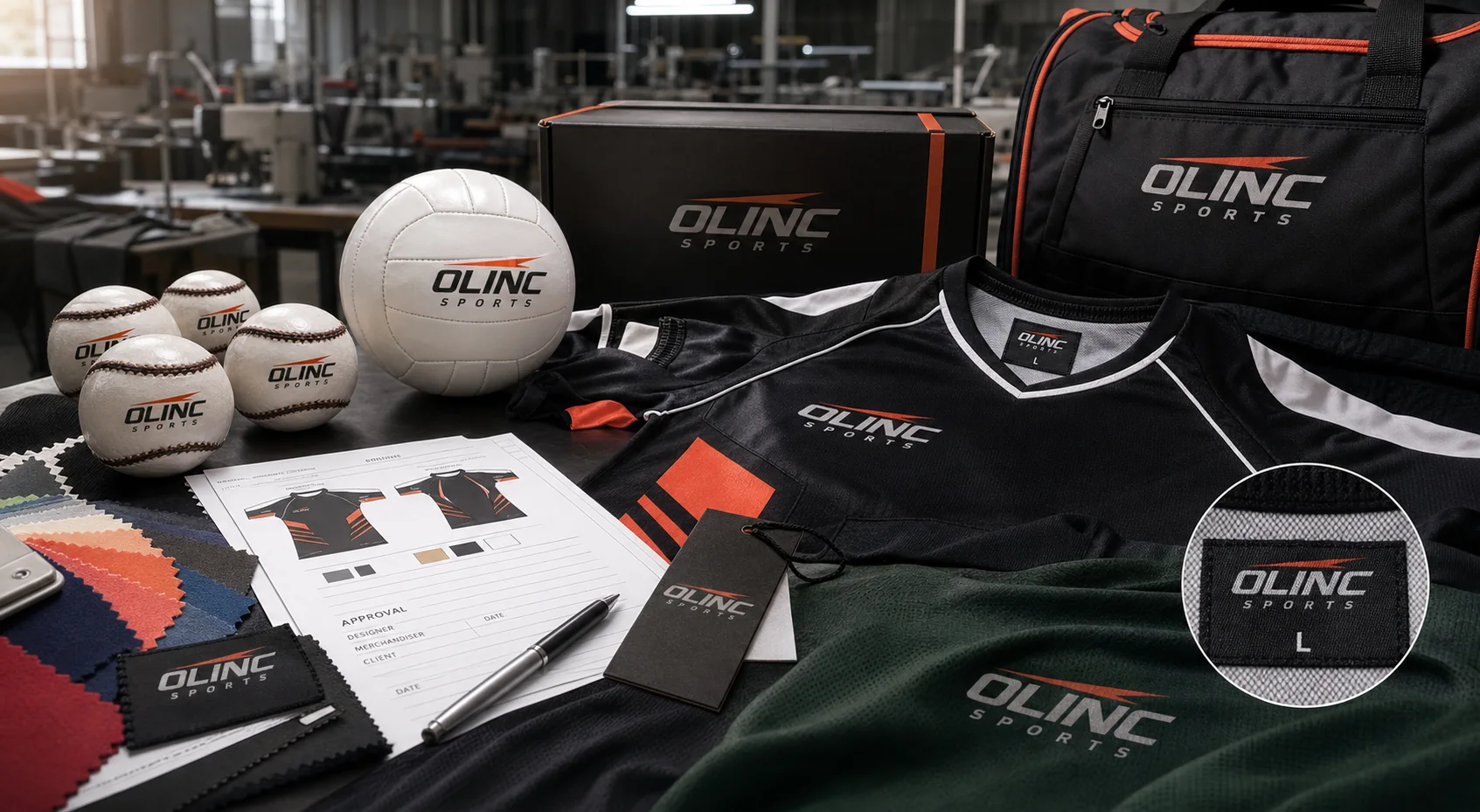
Decoration needs its own sign-off. Record the exact crest, sponsor, player number, woven label, transfer, embroidery or sublimation file and name the application method. Measure placement from stable garment reference points rather than approving it by eye. Note colours with the agreed reference system and review them on the intended material, because screen artwork does not show how ink, thread, transfer film or knit structure will affect the finished result.
OEM and sourcing research
Approve Label Content For The Destination Market
For most textile and wool products sold in the United States, the FTC says labels must identify fibre content, country of origin and the manufacturer or another business responsible for marketing or handling the item. Its business guidance also explains that the responsible identity can be a company name or qualifying Registered Identification Number and that records supporting required label information must establish a traceable line from raw materials to the finished product. Those fields should be reviewed as compliance content, not added as decorative text after sample approval.
Great Britain has a different official route. GOV.UK states that a textile label must show fibre content and that a product with two or more components having different fibre contents must show the content of each. Manufacturers and retailers are responsible for compliance and should check label presence and accuracy. A private-label buyer selling into more than one market should create a destination matrix for label wording, language, responsible-party identity and component disclosures, then assign the correct label version to each SKU and carton destination.
Evidence: U.S. Federal Trade Commission · UK Department for Business and Trade
OEM and sourcing research
Give Care Instructions A Testing Basis
The FTC Care Labeling Rule requires covered manufacturers and importers to attach care instructions to clothing. The guidance says instructions must cover regular care or warn when cleaning cannot occur without harm, and following them must not cause substantial damage. It also says labels should be permanently and securely attached, visible or easy to find, and legible through the product's useful life. A hang tag does not automatically replace the permanent care label for covered apparel.
The legal rule describes acceptable support for care instructions, including reliable evidence for the components and garment as a whole or successful testing of the product or a fair sample. Buyers should define the intended wash, dry, iron and dry-clean statements before testing, then record the method and observed changes in measurements, shade, print, embroidery, trims and label legibility. The approved care text should match that evidence; it should not be copied from an unrelated garment because both products use polyester.
Evidence: U.S. Federal Trade Commission · U.S. Federal Trade Commission
OEM and sourcing research
Define Bulk Inspection From The Approved Sample
Convert the sample decision into inspection points before cutting begins. The checklist can cover fabric identity and colour, critical measurements and tolerances, seam and reinforcement locations, decoration size and placement, label version, care wording, SKU allocation, polybag information and carton marks. Identify which differences are unacceptable, which can be corrected and who can authorize a deviation. This lets an inspector compare production with an agreed reference instead of making a new aesthetic decision at the end of the order.
Retain the signed specification, artwork files, measurement record, test evidence, photographs and one sealed or clearly tagged sample. When the buyer requests a change, issue a new revision and state whether a replacement sample is required before bulk continues. ISO's documented-information guidance supports using records as evidence and communication; the FTC's textile guidance adds a specific US reason to maintain traceable label records. Together they point to the same buyer discipline: the approval file must show what was accepted, by whom and for which market.
Evidence: International Organization for Standardization · U.S. Federal Trade Commission
Buyer checklist
Turn The Research Into A Quote Brief.
01
Identify The Exact Sample
Tie the retained garment to a style code, sample size, colourway, specification revision, approval date and named approver.
02
Separate The Approval Layers
Sign off construction, fit, measurements, grading, colours, decoration and labels as distinct controls instead of one visual yes-or-no decision.
03
Map Labels By Destination
Create market-specific versions for fibre content, origin, responsible-party identity, care information and component disclosures before SKU allocation.
04
Turn The Sample Into Inspection Criteria
Define measurable checks, tolerances, defect decisions and deviation authority before bulk production begins.
Buyer FAQs
Questions To Resolve Before Production.
Does one approved sample confirm every garment size?
No. One physical sample confirms the reviewed size and its documented construction. The buyer should also approve the measurement chart and grading, and request a size set or selected extreme sizes when fit risk, range complexity or order value warrants it.
Can a care label be approved without testing the garment?
For covered US apparel, the FTC requires a reasonable basis for care instructions. Its rule recognizes reliable evidence for components and the garment as a whole or successful testing of the product or a fair sample. Record the evidence supporting the final care wording.
Can the same textile label be used for US and UK orders?
Do not assume so. US FTC guidance covers fibre content, country of origin and responsible-business identity for most covered products, while Great Britain requires fibre content and component-specific disclosure in stated cases. Check all applicable rules and assign a destination-specific approved label file.
What should happen when a buyer changes artwork after approval?
Issue a new artwork and specification revision, identify affected SKUs and production stages, and obtain written approval. State whether a replacement sample, strike-off or other physical confirmation is required before production continues.
Research record
Sources Checked On 2026-07-30.
Dates, rules, schedules and technical statements can change. Open the cited first-party source before using a time-sensitive detail for travel, competition or purchasing decisions.
- Guidance on the requirements for documented information of ISO 9001:2015 — International Organization for Standardization (official; accessed 2026-07-30).
- Threading Your Way Through the Labeling Requirements Under the Textile and Wool Acts — U.S. Federal Trade Commission (official; accessed 2026-07-30).
- Clothes Captioning: Complying with the Care Labeling Rule — U.S. Federal Trade Commission (official; accessed 2026-07-30).
- Care Labeling of Textile Wearing Apparel and Certain Piece Goods — U.S. Federal Trade Commission (official; accessed 2026-07-30).
- Textile labelling — UK Department for Business and Trade (official; accessed 2026-07-30).