Researched 2026-10-06 · Other catalog sport
Little League Jersey Patches: What Must Buyers Confirm Before Ordering?
A youth baseball jersey order needs a separate decision about its official patch: who supplies it, where it goes and who applies it. This evergreen guide checks three Little League resources on 6 October 2026. It concerns purchasing preparation, not a claim that Olinc is a licensed Little League or MLB supplier.
Quick Answer
What Should Baseball Buyers Know?
Confirm the league's patch requirements before releasing the jersey artwork. Identify the sleeve construction, reserve the required location, assign patch supply and application responsibilities, and review the actual garment with an authorized patch. Keep permission to reproduce team marks separate from approval of jersey fit, colour and decoration.
Baseball research
Which sleeve construction determines patch placement?
Little League's placement page specifies the left sleeve: 3 inches below the shoulder seam for a raglan sleeve and 1 inch below the shoulder seam for a set-in sleeve. For a sleeveless uniform, it specifies the left breast. These are different construction references, so a single placement arrow copied across every jersey style is not enough.
Buyer application: identify the sleeve type on the production drawing and ask the league to confirm the placement interpretation on the sample. Keep the patch area visible in artwork proofs. Do not let a sponsor graphic occupy that space while treating the official patch as something to resolve after decoration.
Evidence: Little League
Baseball research
Who supplies the jersey and the official patch?
Little League's equipment guidance recommends explaining supply responsibilities at registration and making uniform samples available for players to try on. It describes the jersey or T-shirt, hat or visor and shoulder patch as items most leagues provide, while families generally buy pants, belts and socks. That is guidance about typical arrangements, not a substitute for the purchasing decision of a particular league.
Buyer application: make a written supply matrix for your order. Give the jersey, official patch, attachment work and final packing separate owners. A factory quotation for an undecorated patch area does not automatically include the patch itself. Conversely, a box of patches delivered to a volunteer does not establish that the jerseys have been prepared or checked for application.
Evidence: Little League
Baseball research
Does choosing an MLB team name authorize copied graphics?
Little League's MLB-logo policy distinguishes the tradition of teams using MLB names from the sourcing of items bearing trademarks. It encourages leagues to use MLB-authorized and licensed uniform items for those marks and warns about unauthorized manufacture. Do not interpret a familiar team name, downloaded logo or previous season's shirt as evidence that a new manufacturer has permission to reproduce it.
Buyer application: ask the league or rights holder to confirm the permitted sourcing route before approving trademarked artwork. Record who approved which files and for what use. This guide is a purchasing checklist, not legal advice or a statement of anyone's licensing status. Where rights remain unresolved, leave the disputed artwork out of the production release and obtain the necessary confirmation.
Evidence: Little League
Baseball research
Check patch application against the actual garment
The official patch instructions warn against low-melting fabrics, steam and direct hot-iron contact with the embroidered area. That warning makes the attachment method a material decision, not merely a finishing preference.
For the proposed jersey, ask the garment and patch suppliers to confirm a compatible process and review a trial before bulk application. Record the fabric, patch version, attachment method and result together. Do not convert general iron-on instructions into an assumed production setting for an untested garment.
Evidence: Little League
Baseball research
Build a patch-ready sample review, not just a flat artwork approval
Use an actual sample in the selected construction to review the available decoration space. Ask the reviewer to identify the left side of the worn garment and mark the agreed location against the relevant seam. A flat sketch may conceal a sleeve panel boundary or a change in the available area on a smaller size. Record the review with clear photographs and a revision reference.
Include the smallest relevant size in the layout discussion rather than approving only a large display sample. Check whether the patch, sleeve decoration and any contrasting panel can coexist without an improvised move. If the arrangement does not work, seek a confirmed design or construction adjustment before cutting. Do not simply shrink an official mark or move it to a convenient blank area.
For a garment that is to be supplied without an attached patch, specify what 'patch-ready' means in the order. It might mean an undecorated reserved area and a documented placement drawing, but those deliverables must be agreed rather than inferred. Identify who will inspect the final application once the jerseys reach the league. The acceptance step should not disappear because the work happens in a different location.
Ask the sample reviewer to record any puckering, distortion, loose edges or interference with the sleeve opening after the agreed application and care trial. Those observations identify a problem to investigate; they are not a certification test. Agree the required corrective action and repeat the relevant review before approving that garment-and-patch combination.
Baseball research
Release quantities and packing with an application status
Keep a jersey quantity sheet by team, style, size and colour alongside a separate patch allocation. Identify whether spare jerseys require attached patches, loose patches or a later issue decision. Do not rely on total player count alone when extra garments, sample pieces or replacements are part of the order. Reconcile the two lists before dispatch so missing components are visible while there is still time to resolve them.
Where patches are supplied by the league, record the received quantity, patch identity and person responsible for any shortfall. If several people are handling the order, keep one version of the allocation sheet and give changes a date. Avoid sending a revised roster to the garment supplier while leaving the patch applicator with an older count.
Label the packing instruction with the actual completion state: applied and checked, supplied loose by agreement, or not included. A distributor receiving several team cartons needs to know whether they can issue the garments or must arrange another operation first. Include a contact for discrepancies and keep the approved sample record available to the receiving team.
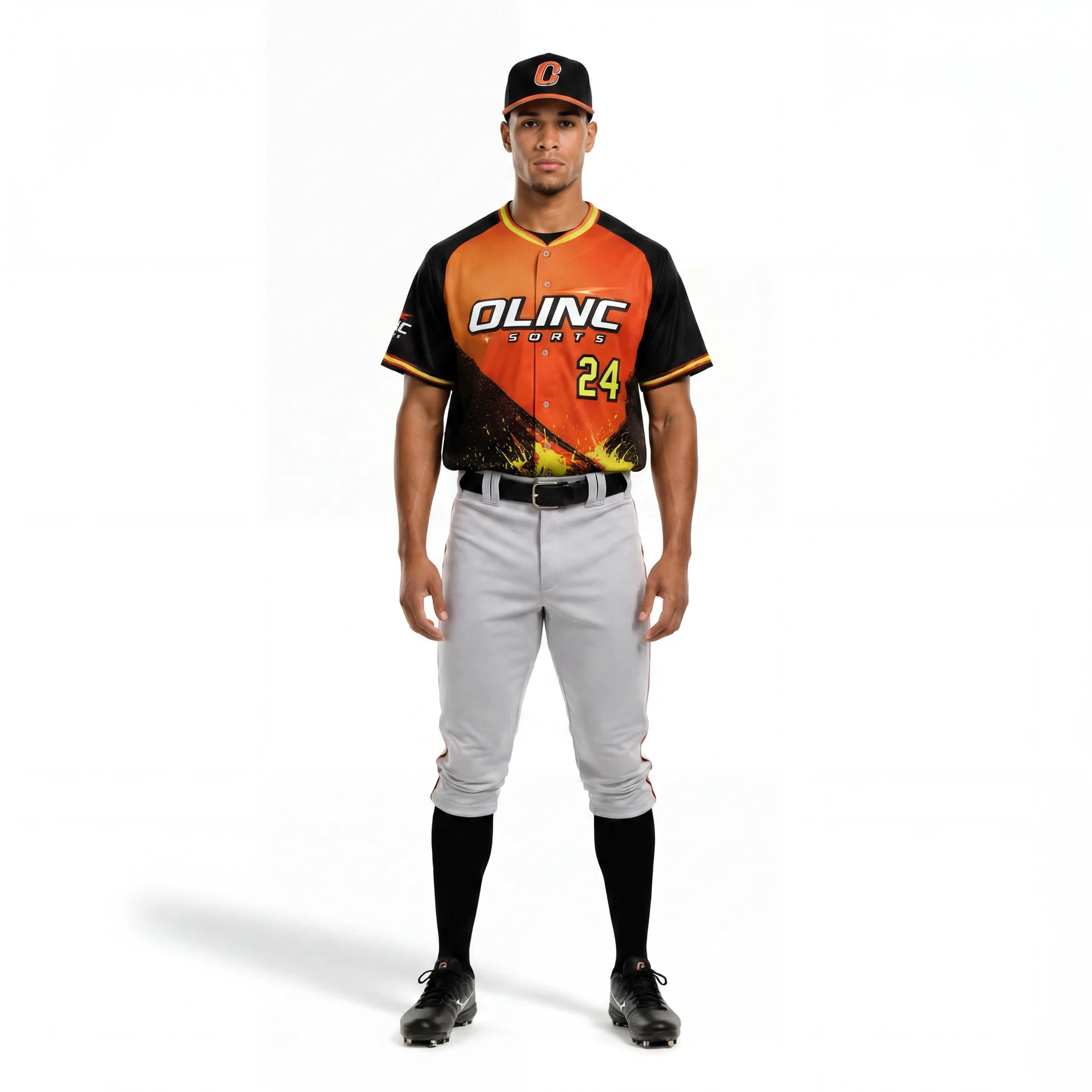
To prepare an Olinc baseball jersey inquiry, send the construction reference, size mix, colourway, artwork you are authorized to use, destination and required date. Explain that official patches need a separately confirmed supply and application route. Ask Olinc to confirm the garment sample and quotation scope; do not assume that a product image demonstrates league approval, patch availability or a licensed-mark arrangement.
Buyer checklist
Turn The Research Into A Quote Brief.
01
Start with the sleeve
Mark the construction and reserve the patch area before sponsor artwork is approved.
02
Name each responsible party
Treat patch supply, application, inspection and packing as explicit order responsibilities.
03
Separate permissions from fit
A garment sample approval does not authorize reproduction of third-party trademarks.
Buyer FAQs
Questions To Resolve Before Production.
Should the jersey quote automatically include official patches?
No. State whether patches are included, supplied by the league or handled separately. Assign responsibility for attachment and final inspection in writing.
Can we approve the layout on only one large jersey?
Review a smaller relevant size too, especially where the sleeve contains other decoration or contrasting panels. Record any layout issue before the artwork is released.
Does this guide mean Olinc is an authorized league supplier?
No. This article explains buyer preparation using official resources. Confirm any required licensing or approved sourcing route with the relevant organization before ordering branded items.
Research record
Sources Checked On 2026-10-06.
Dates, rules, schedules and technical statements can change. Open the cited first-party source before using a time-sensitive detail for travel, competition or purchasing decisions.
- Patch Requirements & Instructions — Little League (official; accessed 2026-10-06).
- MLB Logos On Uniforms — Little League (official; accessed 2026-10-06).
- What Parents, Local Leagues Need to Know About Equipping a Little Leaguer — Little League (official; accessed 2026-10-06).